
A reflection for the 29th Sunday, Ordinary Time, Year A. The readings are Isaiah 45:1, 4-6, Psalm 96; 1 Thessalonians 1:1-5 and Matthew 22:15-21

After reading today’s Gospel I pulled out a Canadian one-dollar coin. The image on that coin is a loon. Well, that doesn’t help much. So I pulled out a twonie, the two-dollar coin. The image on that coin is a polar bear. That didn’t help much either.
But it did make me think of that story about a family of bears whose home is broken into. Remember? someone sits in their chairs – baby bear says, “someone sat in my chair and they broke it. My chair!” Someone eats their porridge. Baby bear says, “someone at my porridge!” and “someone is sleeping in my bed. My bed!” We hate it when someone takes “my stuff”.
Once, I was going through security at the airport and I forgot I had my treasured Swiss Army knife in my pocket. There was no way around it, so they confiscated it. I was so mad! It was my knife! And they’re not cheap. A friend of a friend had bought a TV in Panama to take it home to Ecuador – electronics are much cheaper in Panama than Ecuador. At the airport, arriving in Ecuador the customs guy said he couldn’t bring it in. But they weren’t asking him to pay duties. They were going to just confiscate it. So, guy said, “if I can’t have it, you can’t have it either!” and he dropped the tv and smashed it. We don’t like it when someone takes our stuff! We also don’t like it when we have to give our stuff to someone else – especially if they don’t deserve it. I guess that’s part of our human nature, I mean, one of the first words a toddler learns is “mine.” And we spend the rest of our lives trying to learn how to share.
Read more…A reflection for the 26th Sunday, Ordinary Time, Year A. The readings are Ezekiel 18:25-28; Psalm 25; Philippians 2:1-11 and Matthew 21:28-32.
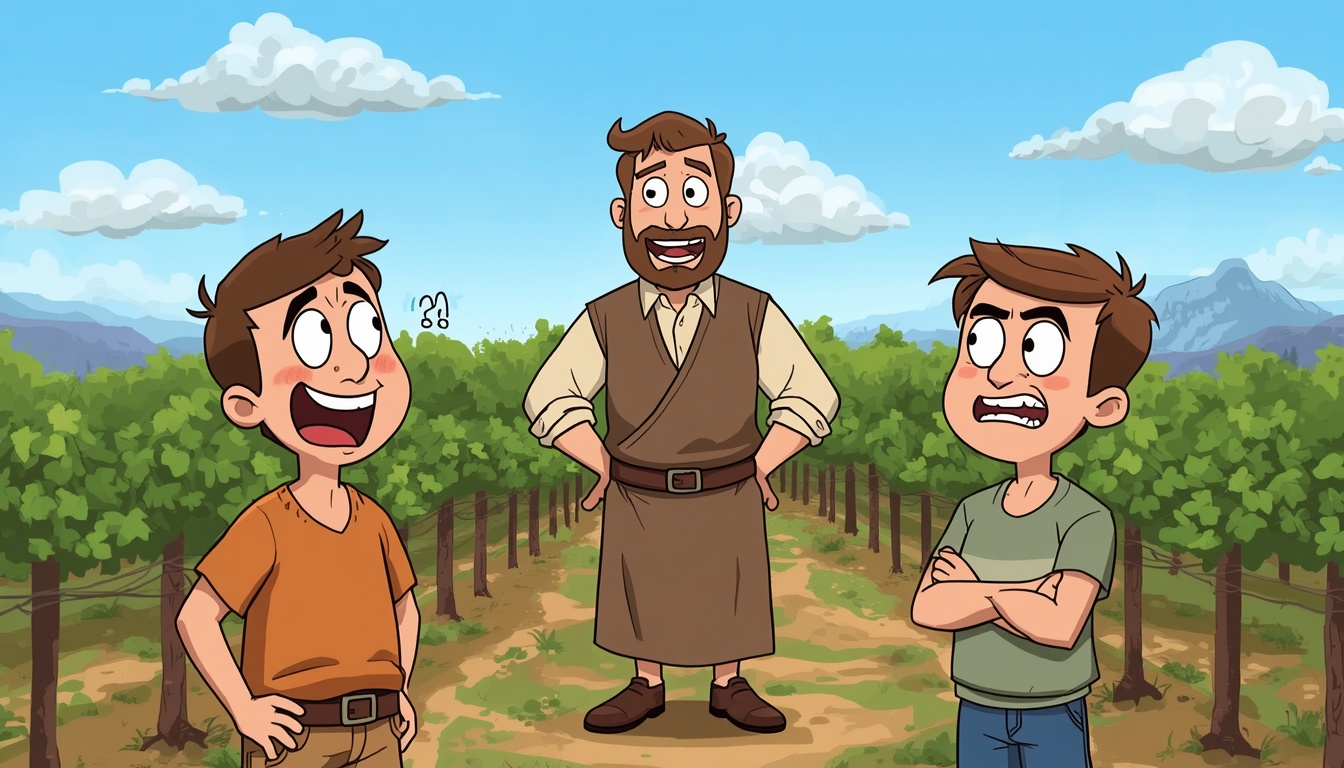
Last week we heard the parable about the owner of a vineyard who goes out to the market at dawn to hire labourers. Then he goes out mid-morning and at noon, in the middle of the afternoon and later in the day and hires more labourers telling them that he will pay them what’s fair. The whole point of the parable is that it doesn’t matter “when” God call us; what matters is “that” calls us. And God calls us: all of us. Today’s parable is about how we respond to that call. All those guys last week say, “I’m in. I’ll go.” But we don’t always respond that way. If I was Jesus (not that I will put myself in that category), in order to make that clear, I would have added a couple more guys to last week’s parable. The owner of the vineyard goes out at the end of the day and sees these guys sitting around smoking. “Why are you guys here? You too, go to work in my vineyard.” The guys look at each other and at their card game… “It’s already 6 o’clock. We’re not going to go work for just one hour. Thanks. Maybe tomorrow.” Everyone get’s called and it matters how we respond to the call.
That’s what today’s parable is about. The owner of the vineyard – maybe the same guy as last week – this time, asks his sons to go work. One says yes, I’m in, but then he doesn’t go; the other one says no, but then changes his mind and goes. It’s interesting that Jesus doesn’t just say that one says yes and goes and the other one says no and doesn’t go. So, it’s not about whether we say yes or no (although that, obviously matters when it comes to eternal Salvation).
It’s about the fact that we can change our minds.
Read more…
A reflection for the 16th Sunday, Ordinary Time, Year A. The readings are Wisdom 12:13, 16-19, Psalm 86, Romans 8:26-27 and Matthew 13:24-423.
My wife and I finally gave up the eternal battle against the dandelions and the thistles and all the other weeds: clover and violets… they’re very pretty but we want grass… So I called Weed Man.
And, clearly, I have no idea how to deal with weeds because I thought they were going to come with like a blow torch and be done with all of them. But that’s not how it works. First they come and fertilize (how the fertilizer knows to only fertilize the grass, I don’t know; I’m sure they were fertilizing all the weeds!) and then, a month later, they come with the first application of their weed control. And then, a month later, they do that again… and then…. Wow… the whole thing takes forever! It’s clear that we are going to have to wait two summers to see if it’s worth it. And, we will probably still have to help by manually removing the thistles and fertilizing and seeding…
As much as I would have liked them to come with a blow torch and blow up all my weeds… I guess it makes sense. The important things in life, like taking care of weeds (and I don’t mean the literal weeds), takes time. And when it comes to weeding, God is not the God of the blow-torch. God is the God of the long-game. I guess it’s because the long-game is the only way to permanently and completely, best remove the weeds, the distractions, the sin and patterns of sin, that prevent us from putting God first.
Read more…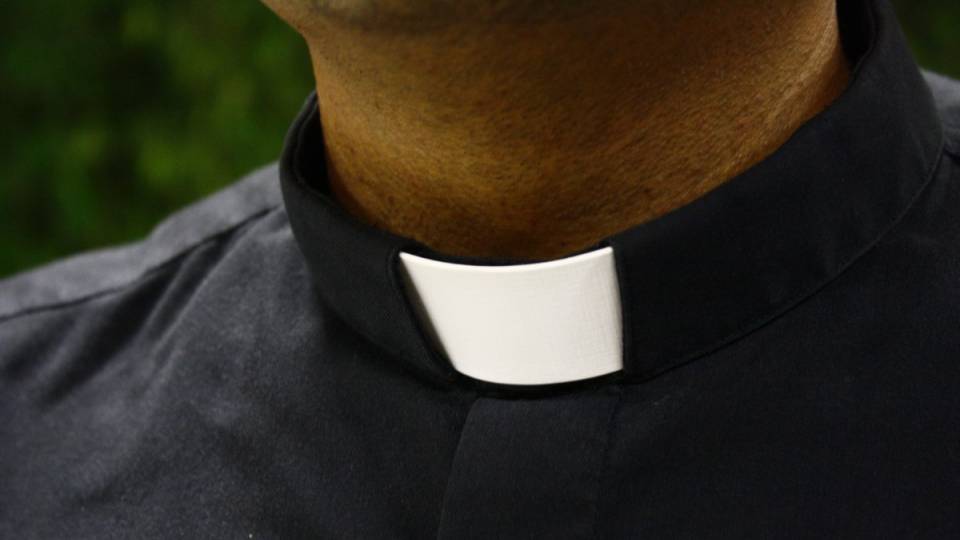
It’s a question I hear a lot, and I understand why. When the sexual abuse crisis in the Church comes up, celibacy is often the first thing people point to. Take away celibacy, the thinking goes, and you take away the problem.
I don’t think that’s true, and here’s why.
The Same Vulnerability Exists in Every Vocation
Celibacy isn’t the only vocation where people make a lifelong commitment and then, tragically, some violate it. Married people make vows too. Abuse happens across every state in life, married and celibate alike, and in every institution that gives adults access to children, not only the Church.
That’s not a guess. It’s what the research actually shows:
– The largest study ever done on this crisis, from the John Jay College of Criminal Justice, was commissioned by the US bishops themselves and published in 2011. It found that celibacy was not a cause of the abuse crisis. Abuse rates rose through the 1960s and 70s and fell sharply after the mid-1980s, while the celibacy requirement never changed. The researchers pointed instead to poor seminary formation, inadequate emotional preparation among men ordained in the 1940s and 50s who later faced the social upheaval of the 1960s largely unsupported, and situational factors like unsupervised access to children.
– A 2018 criminology study looked at insurance claims across denominations from 1987 to 2007. Protestant congregations, whose clergy are overwhelmingly married, filed more abuse claims per year in that period than Catholic ones did.
– A 2004 US Department of Education report found roughly 1 in 10 public school students report an unwanted sexual advance from an educator, a profession with no celibacy requirement at all.
The pattern holds everywhere adults have unsupervised access to children. That’s a hard truth, but it’s an important one: this isn’t a celibacy problem. It’s a human one.


