
What God Intended from the Beginning
A reflection for the 27th Sunday, Ordinary Time, Year B. The readings are Genesis 2:18-24, Psalm: 128, Hebrews 2:9-11 and Mark 10:2-16.
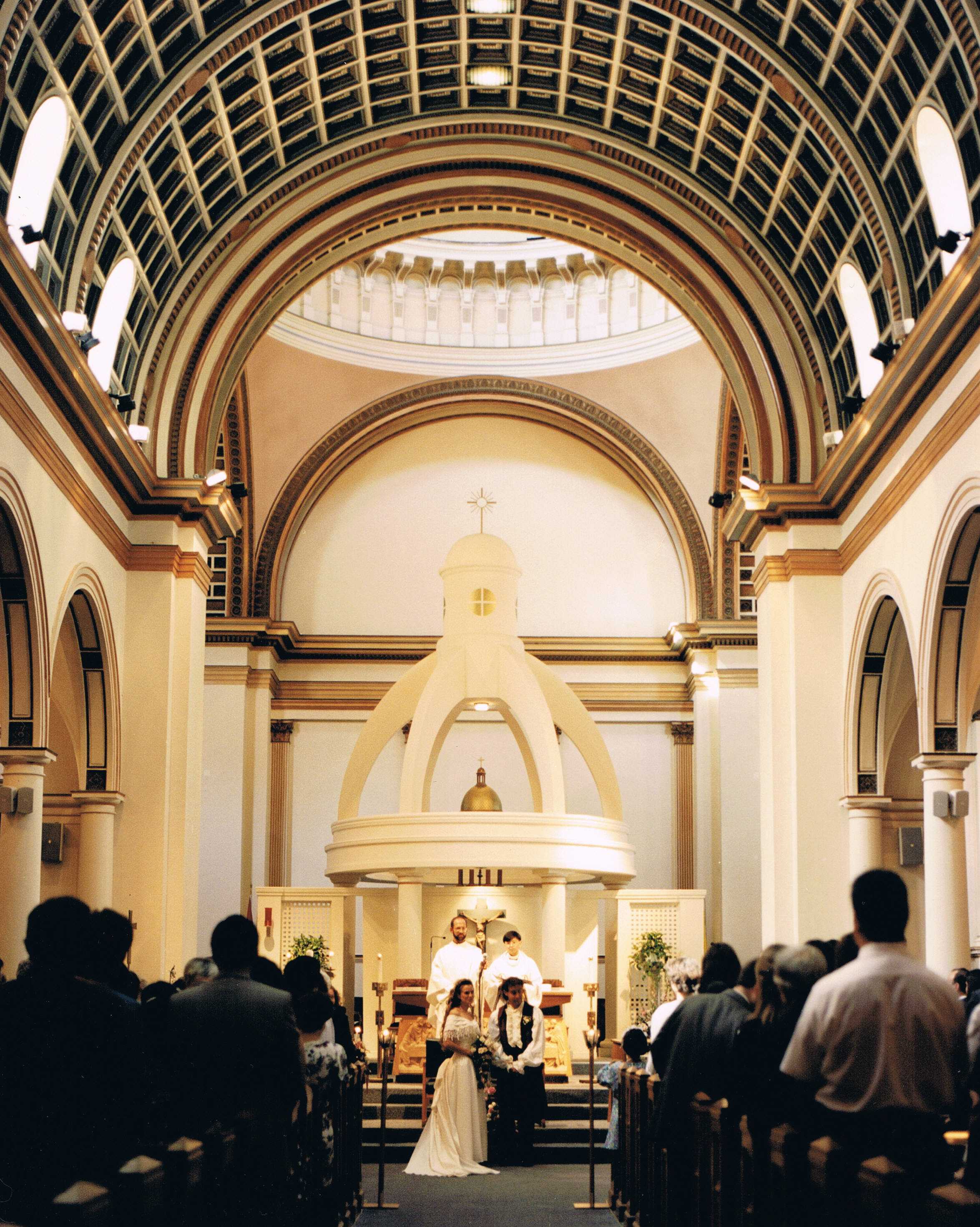
“Therefore a man shall leave his father and his mother and cling to his wife and the two shall become one flesh.”
That line is what inspired Saint John Paul II to give a series of reflections that has come to be known as The Theology of the Body. Have you heard of it? From 1979 to 1984, Pope John Paul II, during his weekly General Audiences, gave 129 addresses, inspired by this scripture passage on marriage and divorce, which led him to the Book of Genesis and to look at the nature of sin and grace, of love, marriage, what it means to be a man, what it means to be a woman, what it means to be created in the image of God – it’s a wonderful catechesis on love, marriage and sexuality – and because we are created, male and female, in the image of God, it also gives us a glimmer as to the very nature of God. In short, Theology of the Body says that the very mystery of God is revealed to us through our bodies. I encourage you to look it up. If you have a body, the Theology of the Body is for you.
(A great place to start is with Christopher West. Pick up his Theology of the Body Explained.)
Theology of the Body says that from the beginning, God intended for man and woman to cling to each other and become one flesh. John Paul II says that the very first thing that God does after He creates everything, He creates human beings, male and female, in His image, He blesses them and he says to them, “be fruitful and multiply.” The first thing that God does after He creates everything, is create marriage. John Paul II says that, because of this, marriage is the primordial Sacrament – because it existed before all the other Sacraments; it existed even before original sin! And God creates marriage because in that fruitful, total and equal union, that can only take place between one man and one woman, we can come closest to being an image of God, because in that union, that we call marriage, we can love another person the way God loves us.
Theology of the Body then explains that there are four qualities to the way God loves us:
1. God loves us freely. God’s love is free. Jesus says, “I give my life, no one takes it from me” (John 10:18). God’s love is a gift. You can’t buy it; you can’t sell it; you have it. And all love also has to be free. If love is not a free gift, it is not love. And of course, marriage and married love also has to be free.
2. God loves us faithfully. Jesus says, “I am with you always, until the end of time” (Matthew 20:20). God is always faithful and that’s why love also has to be faithful. If love is conditional, it is not love. And marriage also has to be faithful. In marriage, faithfulness means that it is forever.
3. God loves us fruitfully. Jesus says, “I came that you may have life and that you may have it abundantly (John 10:10). This means that love is always good, it always leads to good things, it always bears good fruit. And marriage has to be good. If marriage doesn’t make you a better person, it is not love. And of course, the extreme expression of the fruitfulness of love in marriage is that it is procreative: out of this free, faithful and fruitful union, another person can be created!
So, God loves us freely, faithfully and fruitfully and all love, especially married love has to be free, faithful and fruitful. But there is a fourth quality to the way God loves us that is not necessary for other kinds of love, except in marriage, and that is that God loves us totally.
God gives us his total love. God gives himself totally to us. Jesus says, “There is no greater love than to lay down one’s life for a friend” (John 15:13). Everyone has God’s perfect and total love. But we are not called to love other people like that – not your friends or your parents or your children. But, we are called to love our spouses totally. In marriage, a husband pours himself out totally, physically, emotionally, spiritually, sexually, all his dreams, his fears, his baggage, his fertility, everything, into his wife and she receives him totally and then in turn, she pours herself out totally, physically, emotionally, spiritually, sexually, all her dreams, her fears, her fertility, she pours it all out into him and he receives her totally and in this total, free, faithful and fruitful, self-giving and receiving – in this total clinging to each other – they become one flesh. They literally become one body. That’s what God intended from the beginning.
But, sadly, it’s been corrupted. It’s been distorted because of original sin.
This doesn’t mean that divorce is sin. No one plans to be divorced and for many people, divorce is very painful. People think that if you get married in the Catholic Church, the big iron doors close behind you and you are forever trapped, never able to get out. This is not true. The Church would be first to say that if you are in an abusive or unhealthy marriage, get out. The Church will help you. And if someone has ever told you that because you are divorced you are not able to receive Communion, that is not true. Divorce is not sin. If you are living with someone, as if you were married, outside of the Catholic Church, then you probably shouldn’t be receiving Communion. But if you are not sure, come talk to a priest or a deacon, we may be able to fix it.
One of the ways in which it may be fixed is through an annulment. People think that an annulment is a “Catholic divorce”. That’s not what it is. A civil divorce looks at something that is real and breaks it. An annulment looks at something that is real and determines whether it is valid in the Catholic Church. And there are many reasons why a marriage may not have been valid, namely, if the spouses didn’t enter into it freely or didn’t intend to be faithful or fruitful. An annulment is not for everyone. If you don’t intend to get re-married in the Catholic Church you don’t need an annulment, but for many people, especially after a painful divorce, an annulment can be healing and help bring closure. If you want to find out more, go talk to your priest or deacon.
From the beginning God gave us the beautiful gift of marriage, so that those who are called to marriage (because it’s not for everyone, but it is for most people) are able to come closest to being an image of God. That is why a man shall leave his father and his mother and cling to his wife and the two become one flesh, able to love each other as God loves us, freely, faithfully, fruitfully and totally.


 deacon pedro