

A reflection for the 26th Sunday, Ordinary Time, B. The readings are Numbers 11:25-29; Psalm 19; James 5:1-6 and Mark 9:38-43, 45, 47-48.
Today is the World Day of Migrants and Refugees. It is a day that has been observed by the Catholic Church for 107 years, so it’s clear that for a long time refugees have been of great concern for the Church. But people who work with refugees, especially people in the church who work with refugees, say that the refugee crisis today is worse than it has ever been. Today there are 100 million refugees and internally displaced people around the world. These are people who are actually living in camps. And what’s different about today, as opposed to other times when we’ve had refugee crises, like, for example, after the second world war, is the length of time that people are in a refugee camp. It is very common today for someone to be born in a refugee camp, to grow up in that same refugee camp and to become an adult in that refugee camp. The average stay at a refugee camp today is 20 years. It is a crisis and some would argue that it is the crisis of our day. There are so many other crises; we’re in a climate crisis, there’s a pandemic, but none are as bad as this refugee crisis, which is made worse by all the other crises: the climate crisis and the pandemic and every other political crisis that is happening around the world. And it is a crisis that affects us, even if only indirectly. But I think it’s a crisis that we can affect, maybe just by simply changing our attitudes.
Read more…A reflection for the Solemnity of the Assumption of the Blessed Virgin Mary. The readings are Revelation 11:19a; 12:1-6a, 10a; Psalm 45; 1 Corinthians 15:20-27 and Luke 1:39-56.
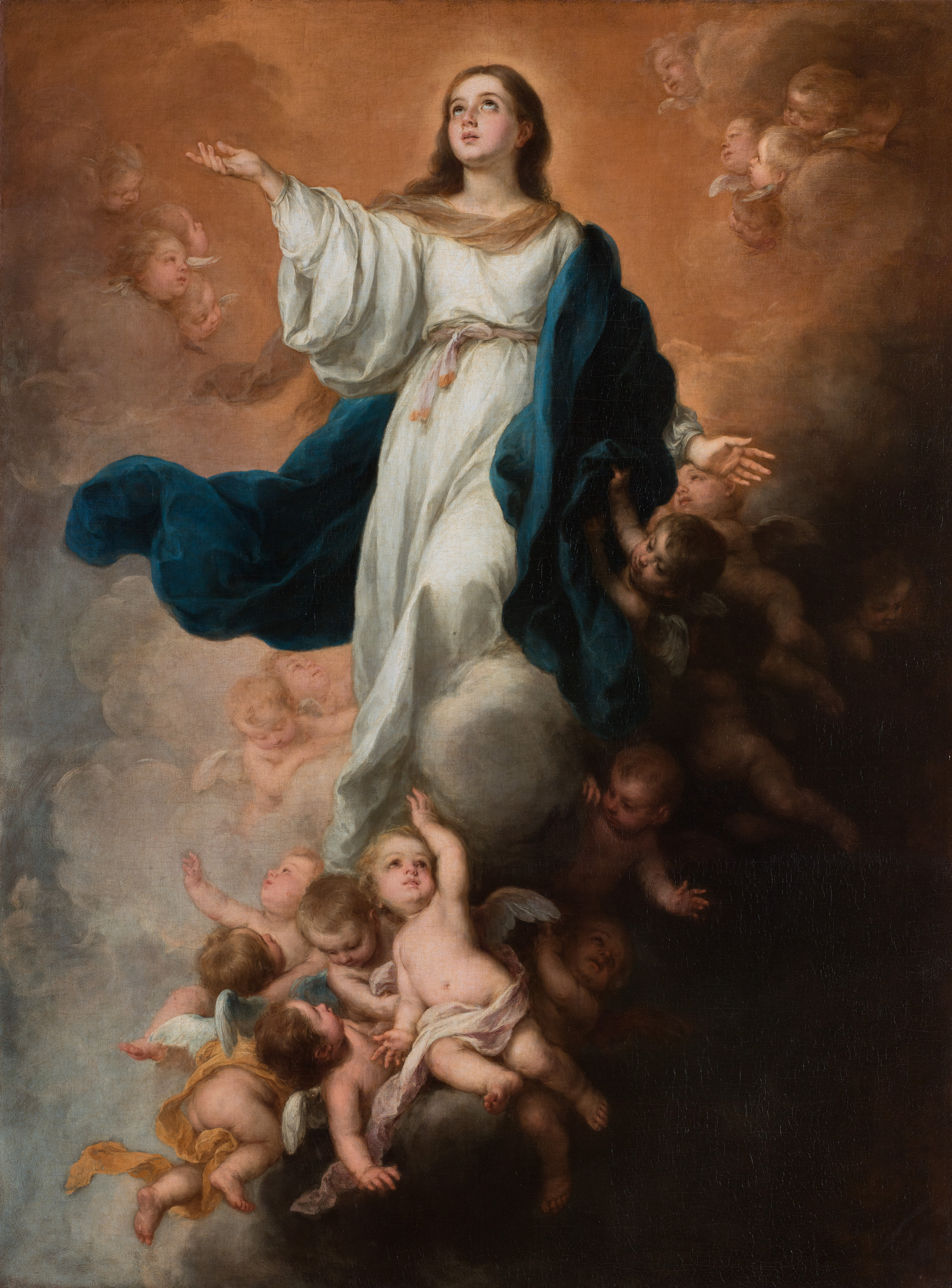
“Blessed are you among women…”
How many times have we said those words? Thousands of times. And maybe not even thinking about what we’re saying.
I grew up in Latin America, as you know, where there is a huge cultural devotion to Mary, as is the case in a lot of the countries where many of you come from. I think that for that reason I actually did not grow up with a great devotion to Mary because it seemed a little superstitious to me and it also didn’t make any sense because I thought, “why should I go to Mary, why should I pray to Mary, when I can just go straight to Jesus?” So it didn’t make sense to me.
I thought that we called Mary blessed – blessed are you among women – because she’s a saint. All the saints are blessed. I mean she is the saint of all saints; she was chosen to be the mother the Son of God, but I still thought she’s blessed because she’s a saint. Why does Elizabeth greet her and say that she is blessed? Blessed are you among women and blessed is the fruit of your womb? And then later on Elizabeth says, “Blessed are you who believed that the promise that was spoken to you would be fulfilled.” And then later on, Mary herself, in the Magnificat, the prayer that she prays as a response to Elizabeth’s greeting, says, “from this day all generations will call me blessed.” And it’s true: Up to this generation we still call her blessed.
But why?
A reflection for the 17th Sunday, Ordinary Time, year B. The readings are 2 Kings 4:42-44; Psalm 145; Ephesians 4:1-6 and John 6:1-15.

“Jesus then took the loaves and gave thanks…”
That’s what I’d like us to focus on today: Jesus gives thanks, the way Jewish people always gave thanks before eating: Barukh ata Adonai Eloheinu melekh ha’olam hamotzi lehem min ha’aretz. “Blessed are You, Lord our God, King of the universe, who brings forth bread from the earth.” That small action is what I think makes the whole difference in this beautiful story we hear today – that we’ve heard so often because it is one of the few stories that is found in all four Gospels. In fact in Mark and Matthew it happens twice: Jesus feeds the multitudes twice in Mark and Matthew. That’s how significant this story is.
Read more…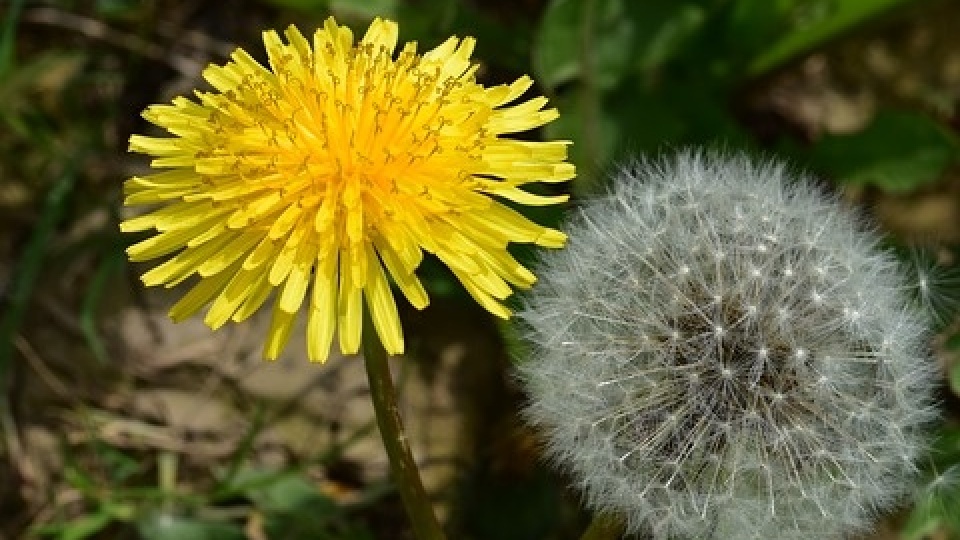
A reflection for the 11th Sunday in Ordinary Time, year B. The readings are Ezekiel 17:22-24, Psalm 92, 2 Corinthians 5:6-10 and Mark 4:26-34.
I don’t know the first thing about gardening. If the plant needs more than watering once a day, forget it. Last year we had two tomato plants and that was amazing. Once we found the perfect sunny spot for them, all we had to do was water them once a day and before you know it, we had like 200 hundred tomatoes! It was a fruitful harvest! Plants are amazing, really. Even grass. Have you ever planted grass? Last year (and this year) we are fixing these dead patches in our lawn and it’s amazing: you throw some dirt; scatter some seed and then water it once a day. Seven days later there are these baby grasses growing – so cute! And keep watering for another week and the grass is already all grown up and that’s it. It will continue to grow and spread. There’s nothing you need to do. It’s a miracle.
This year I have become fascinated with dandelions. Those things are amazing! You know you have to dig them out from the root – so this year (because we’re fixing our lawn), we started digging dandelions. We spent all afternoon one Saturday and pulled maybe 100 or so. The next day I look at the lawn and there are like 100 little stems that have all of a sudden shot up. I’m like, “I can’t spend another two hours digging all these out before they flower” (because there aren’t 100 dandelions in our lawn, but like 100,000!). So I decided that if I just cut the stems off, at least they won’t go to seed (cause each flower has like 1000 seeds!). So I went and ripped off a whole ton of stems. The next day I look out and there are like 100 more stems and flowers! So I ripped them all again (even though the flowers look so pretty). The next day; 100 more stems and now they’re turning white! Those things are amazing. You can’t kill them. They’re really hard to uproot. You don’t have to plant them. You don’t have to water them. They grow anywhere; they’ll grow through the sidewalk; through the cracks in your driveway! So I did some research. Turns out that dandelions are also like a super food. You can eat the roots; you can eat the stems, the leaves, the petals… the whole thing! They have all these nutrients and they’re supposed to be good for your blood pressure, your cholesterol, they help fight inflammation, they lower your blood sugar; they’re good for your liver function…. They’re miracle plants. I swear they’re also probably the cure for COVID! They’re amazing. All plants are amazing. All animals are amazing.


 deacon pedro