
Reflexión para Viernes Santo. Las lecturas son Isaías 52:13-53:12; Salmo 31; Hebreos 4:14-16, 5:7-9 y Juan 18:1-19:42.
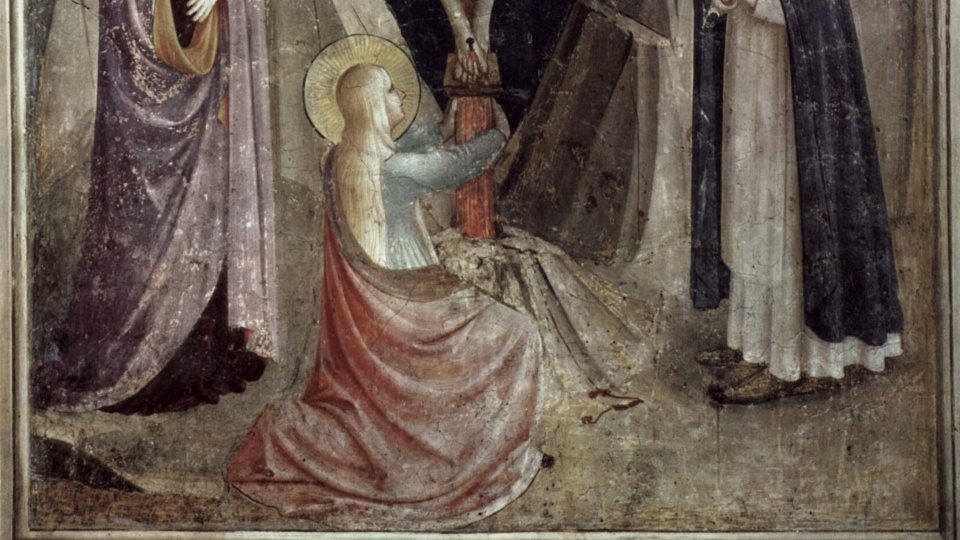
Esto no me pasa a menudo, pero en las últimas semanas, por alguna razón, he estado contando los días hasta el viernes. ME imagino que mucha gente hace eso. No pueden esperar a que llegue el fin de semana. Y cuando llega, decimos: “¡gracias a Dios es viernes!” En inglés, “Thank God it’s Friday!” Incluso en inglés hay imágenes que podemos enviarnos por chat o poner en las redes sociales: “TGIF”; gracias a Dios es viernes. En español siempre recibo chats que dicen “feliz viernes”.
Pero entonces llegamos a esta semana, y a este día — gracias a Dios es viernes — este día que en inglés le dicen “Good Friday”, “viernes bueno”. En Español es “Viernes Santo”, pero debería ser “viernes negro” o “viernes triste”. Supongo que el nombre oficial es “Viernes de la Pasión del Señor”. Viernes Santo.
En mi mente lo entiendo. Este viernes es “bueno” porque nos dirige al domingo. Sin la muerte, no hay resurrección. Honramos este viernes como “bueno” porque nos conduce a una victoria.
Read more…A reflection for the 4th Sunday in Lent, Year A. The readings are 1 Samuel 16:1b, 6-7, 10-13; Psalm 23; Ephesians 5:8-14 and John 9:1-41.
It’s hard to listen to today’s Gospel and not think of the song, Amazing Grace…
…how sweet the sound that saved a wretch like me.
I once was lost but now I’m found;
was blind but now I see.
But there’s so much to today’s Gospel – it is so rich! We could focus on the fact that this is Jesus’ sixth Sign (that’s what John calls Jesus’ miracles) in the Gospel of John – next week we’ll hear about the seventh: the raising of Lazarus. We could talk about how this Sign also comes with one of the seven “I Am” statements from Jesus: “I am the light of the world”. Next week we’ll hear him say, “I am the resurrection and the life.” We could speak about the baptismal character of the story: the man washes in the waters of the Pool of Siloam and is healed – that’s like baptism. Or we could speak about the Sacramental aspect: Jesus makes mud and puts it on the man’s eyes. That’s physical matter being used: a physical sign of an invisible Grace… There’s so much.
But I really just want to focus on one aspect; that one line: “one thing I know, that I was blind and now I see.”
That’s what happens when we encounter Jesus. It changes us.

A reflection for the 1st Sunday, Lent, Year A. The readings are Genesis 2:7-9, 3:1-7; Psalm 51; Romans 5:12-19 and Matthew 4:1-11.
I’m sure everyone reading this wants to be happy, right? And guess what? God also wants you to be happy. He wants you to be happy with Him. But we are fallen human beings and we’re weak. And there’s this thing called sin. So it’s hard.
Last week we heard that we should not murder, commit adultery or perjury (Matthew 5:17-37) and that most of us do not. And so we don’t think of ourselves as sinners. But that Jesus calls us to a higher standard. Yes, the 10 commandments are sin, but if we are really serious about our Christian journey on our way to be happy with God, we have to have a deeper understanding of sin.
The words in Hebrew and in Greek that are used in the Bible for “sin” is the same word that is used in the context of archery to mean “missing the mark”. In Archery we shoot an arrow and we try to hit the bull’s eye. If we miss the bull’s eye, we’ve missed the mark. I think this this is a good image of what sin is. It is missing the mark. The problem is that we don’t even know we’re trying to hit a mark? We don’t know what the bull’s eye is. So, what is the mark we’re trying to hit? It’s happiness with God. It’s being with God. It’s saying “yes” to God. When we fail to say “yes” to God, we’re missing the mark. So, sin is anything that we do that says “no” to God. But it’s not always very clear. I don’t mean when we’re praying or we’re at Mass. That’s clearly (or should be) saying “yes” to God. But it’s at other times. When we’re doing other things. Every choice that we make (especially the big ones), we are either saying “yes” or “no” to God. In everything we do and say, we are either saying “yes” or “no” to God. And we’re not talking about murder and adultery. We’re talking about the less obvious things. The things when we are not thinking about God. And so, I think that it’s important to think about what leads us to sin. Those are temptations.
Every time we pray the Lord’s prayer, we ask God to “lead us not into temptation”. That is asking God to help us not fall into sin. That’s a good prayer to pray. Temptation is anything that can lead us to sin, to miss the mark. Temptation is anything that leads us or attracts us to say “no” to God. Anything that we do outside of God, is sin. Anything that leads us or attracts us or pushes us to do things without God, is temptation. Any thing we do to be happy without God is sin. Any desire we have to be happy that excludes God, is temptation.
So, here’s the question again: Do you want to be happy? Does your plan for happiness include God?
Read more…A reflection for the 4th Sunday in Ordinary Time, Year A. The readings are Zephaniah 2:3, 3:12-13; Psalm 146; 1 Corinthians 1:26-31 and Matthew 5:1-12a
I was at a funeral recently and you know how at funerals they always remember the best of the person who has died. They’ll say that they are generous, kind, fun. No one will ever say at a funeral, that the person who died was arrogant and proud, right? Because arrogance and pride are not good qualities and we know that. So it’s good to know that God, in the readings today, is telling us the same thing. The Christian life is not the “lives of the rich and famous”. The Christian life is the life of the lowly and humble.
In the first reading, from the prophet Zephaniah, we are told to be humble. Humility is a good quality. In fact, we are told that God left us a people – the remnant of Israel—who were humble and that humility would be rewarded. St. Paul is a bit more direct. He tells the Corinthians that they are nothing. They weren’t smart, they weren’t rich, they weren’t powerful – not before God chose them and they were baptised. He’s really reminding them that without God we are nothing. And that is really what humility is all about. If you look up humility in the dictionary it will say something about being modest, even putting yourself down. But that’s not humility. Humility is being real. It’s not inflating your qualities or exaggerating them – that’s arrogance. But it’s also not demeaning yourself. That’s false humility. St. Therese said that “humility is truth”. That’s what humility is, being true to who you really are. It means being down to earth. That’s what the word means. It comes from the Greek “humus”. It means “earth”. If you want to understand the meaning of humus (not the delicious dip), think “compost”. That should keep you grounded. We are compost. But not because we are worthless. In the Christian sense, humidity means, acknowledging that we are nothing without God. A few weeks ago we were hearing about John the Baptist. The hallmark of John the Baptist is that he says, “that I will decrease, so that He may increase.”


 deacon pedro