

A reflection for the 3rd Sunday, Ordinary time, year A. The readings are Isaiah 8:23–9:3, Psalm 27, 1 Corinthians 1:10-13, 17 and Matthew 4:12-23.
“Repent, for the Kingdom of God is at hand.” Jesus today tells us to repent – we think that repent has to do with asking for forgiveness, but repent is really a word that means change or reform; turn your life around. Last week I reminded you of five things you should be doing every day so that your heart is ready to receive Jesus; to recognize him: Prayer, Scripture, Sacraments, Parish Community and Service/Charity. How’s that been going this week? So while we’re focusing on reforming our lives and changing things in our lives, I’d like to show you what I do.
Let’s pick one of these five: Scripture, and I’ll show how I read, prayed with and studied Scripture this week. If I was able to do it, anyone reading this can do it too.
Read more…
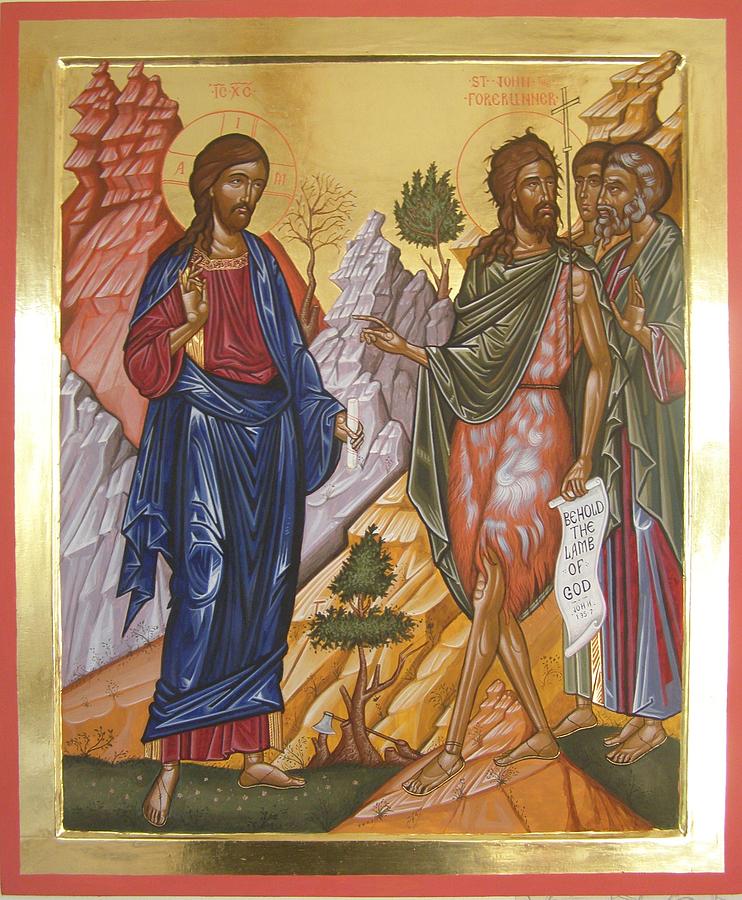
A reflection for the 2nd Sunday, Ordinary Time, Year A. The readings are Isaiah 49:3, 5-6, Psalm 40, 1 Corinthians 1:1-3 and John 1:29-34.
“I did not know him” says John the Baptist! Imagine, John the Baptist, the relative of Jesus; his cousin, maybe, says that he didn’t know him! And he says it twice! I suppose it’s possible that he really didn’t know him, that they were distant cousins, but a different translation (that I prefer) says, “I didn’t recognize him.” It’s like they’d known each other all their lives… 30 years; they saw each other at all family get-togethers and maybe spent a few summers together; they were cousins…. And John did not recognize Jesus as the Messiah. It’s like your little niece who you remember to be so shy and quiet and next thing you know she’s all grown up and she’s class valedictorian and goes to Law School and now she’s running for Prime Minister. Wow! I didn’t know her. No idea.
Two questions I want to ask you today: Do you know Jesus? We know a lot about Jesus, but do you know Him like you know your best friend or your spouse? And if not, what has to happen in your life so that you can know him?
Read more…

A reflection for the 33 Sunday, Ordinary time, Year C. The readings are Malachi 3:19-20a, Psalm 98, 2 Thessalonians 3:7-12 and Luke 21:5-19.
Earlier this week I found myself listening to R.E.M.’s It’s the End of the World (although I much prefer the cover by Great Big Sea). It’s a good song and, while I’m not exactly sure what it’s about, I always think about it around this time of the year when all the Mass readings have to do with the end of times, as we approach the end of the Liturgical Year.
I sometimes wonder when listening to the readings at Mass at this time of the year whether we should be proclaiming them as “the Good News!” Certainly hearing about earthquakes, famine, plagues, wars, destruction and persecution makes me wonder if the Gospel writers were thinking about the time we are living right now!
Read more…

A reflection for the 29th Sunday, Ordinary Time, Year C. The readings are Exodus 17:8-13, Psalm 12, 2 Timothy 3:14-4:2 and Luke 18:1-8.
I was at St. Michael’s hospital in Toronto last week with Maria, a Mexican woman whose husband is on life support. He is a migrant worker that’s been coming to Canada every year, for 8 months of the year, for about 20 years. About a month ago, he had a bad fall, hit his head and has been in the hospital since. When I heard about the accident, I prayed. I prayed that he would be healed. I prayed that the doctors would find a way to fix him. I prayed that God’s will would be done. Surely God wills that a wife and three daughters do not lose their husband and father. I went to see him last Tuesday. He is in ICU hooked up to tubes and monitors, unresponsive. That day I held his hand and prayed more. Wouldn’t it be wonderful if he miraculously woke up, if he would start speaking, would sit up? What a witness would that be to the doctors and nurses! How would that give Glory to God! I prayed for complete and permanent healing for him.
It’s so hard. I may be a deacon, but this is new for me. I’ve never been in the hospital with someone who’s dying. I’ve never been in the hospital with someone who’s on life support. (I’m not the deacon that goes to the hospital and does funerals; I’m much happier doing all the baptisms and marriages.) I know that many of you have been there. But I haven’t. And he’s not even related to me. I’ve never met him before – and still, it’s so hard; I hate it.
Read more…


 deacon pedro