

A reflection for the 4 Sunday of Easter, Cycle B. The readings are Acts 4:8-12, Psalm 118, 1 John 3:1-2 and John 10:11-18.
I don’t own sheep nor do I know the first thing about sheep. But I do own a dog.
Have I told you about our dog? We own a 9-year-old, 85lbs, blond, golden retriever by the name of Max. And Max knows my voice. Max hears my voice. If I say, “Max come,” he comes. If I say, “sit,” he sits. “Lie down,” he lies down. If I say, “Max stay,” he stays… most of the time – at least for a little bit. If some food falls on the floor and I say, “Max leave it!” he leaves it. Max hears my voice very well… when we’re inside the house. If he’s in the yard and I call him, he probably will come, eventually. But if I whistle, he comes right away, because he knows that a whistle means he’s going to get a treat. Our hope is that if he’s ever off running down the street, we can whistle and he’ll come straight home. It hasn’t happened yet. If Max were out in the field or in a forest, it’s likely that, if I call him home, he won’t come – not immediately anyway. Now, if I were to bring Max into Church one Sunday and I called him, I’m pretty sure that he would not come. Not with 300 new people to smell and say hello to. There are just too many distractions that are more interesting than me. See, Max knows my voice; he hears my voice; but he doesn’t always listen.
Read more…

A reflection for the 3rd Sunday in Easter, Cycle B. The readings are Acts 3:13-15, 17-19; Psalm 4
1 John 2:1-5a and Luke 24:35-48.
When reading and praying about these readings, I came across a homily by Fr. Richard J. Fairchild of Spirit Networks. He used three stories that really illustrate what I’d like to share with you today, and so I am sharing them as part of this reflection. I hope that, as his sharing them allowed them to touch me, my sharing them now with you, will help the Word of God touch your heart.
There was once an explorer who, after many years in the Amazon, returned home to England, where he proceeded to share with everyone he met about his wonderful adventures. But he really struggled with really sharing the reality of the Amazon. He could draw pictures and maps, he could write stories and descriptions but, how could he describe the taste of a tropical fruit or the smells of the tropical flowers that he had discovered. How could he describe the sounds of the exotic birds at sun down? So he shared as much and encouraged people to go to the Amazon themselves. He gave them clear descriptions as to how to get there and how to prepare for such a trip. He told them how to avoid dangers and gave them all the information they needed. His adventures were well received. In fact, an organization was founded and a museum was opened so people could read his writings and look at his pictures and maps. Everyone was very excited to learn about the Amazon, but no one went. Years later, the museum still stands and many have studied the writings and descriptions of his journey. There are many experts on his journey and many people who now know about the Amazon because of him – but no one really knows the Amazon, because no one ever went after he did. Read more…
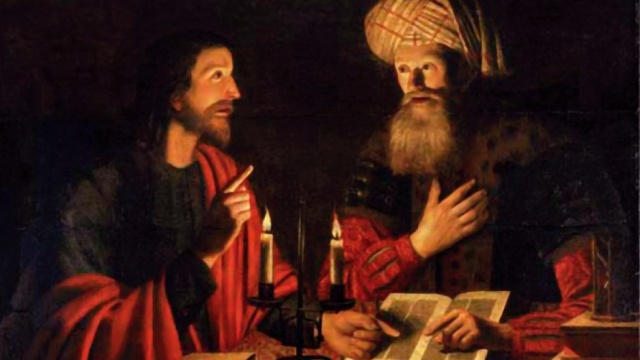
A reflection for the fourth Sunday in Lent, Year B. The readings are 2 Chronicles 36:14-17a, 19-23; Psalm 137; Ephesians 2:4-10 and John 3:14-21.
Nicodemus was a Pharisee and a religious leader; perhaps a member of the Jewish Council, the Sanhedrin. It’s the Feast of Passover and Jesus is in Jerusalem. All eyes are on him. Nicodemus is interested in Jesus but he doesn’t want everyone to know, so he goes to Jesus at night, in the cover of darkness. What follows is a well-known exchange that includes a classic device that the Gospel of John uses: Jesus is misunderstood. Jesus tells to Nicodemus that no one can see the Kingdom of God unless they are ‘born from above.’ The word for ‘from above’ in Greek is the same word as ‘again’ so Nicodemus responds, “How can anyone who is born, be born again?” Which leads to Jesus explaining what He actually means and leads us to today’s Gospel. I am going to propose that what Jesus is actually speaking about is Grace.
Read more…

A reflection for the 1st Sunday, Lent, year B. The readings are Genesis 9:8-15; Psalm 25; 1 Peter 3:18-22 and Mark 1:12-15.
When you think of Lent, what do you think of? Do you think of feasting or fasting? Do you think of partying or penance? True that Lent is a penitential season, but do you know that the word “Lent” comes from the old English word, “lencten” which means “Springtime”? It comes from the old Germanic: Lengen-tinza which literally means “long days”. (you can see in “lencten” the similarity with the word “lengthen”.) So Lent refers to the lengthening of days; to the light that is defeating the darkness.
How many of you, when you think of Lent, think of Baptism? Surely the Catechumens, those preparing for Baptism at Easter, who do their final preparations during Lent are thinking of Baptism, but the rest of us? Recently I received a book by Jerry Galipeau titled, You Have Put On Christ: Cultivating a Baptismal Spirituality. In it he says that Lent is a baptismal time. He quotes the Second Vatican Council Constitution on the Sacred Liturgy, #109:
The season of Lent has a twofold character: primarily by recalling or preparing for baptism and by penance, it disposes the faithful, who more diligently hear the word of God ad devote themselves to prayer, to celebrate the paschal mystery. This twofold character is to be brought into greater prominence both in the liturgy and by liturgical catechesis.


 deacon pedro