

A reflection for the 5th Sunday in Easter, Year A. The readings are Acts 6:1-7; Psalm: 33; 1 Peter 2:4-9 and John 14:1-12.
Many of you know that I work for Salt + Light TV. I make documentaries, videos and TV programs to help people connect with the Catholic Faith. Sometimes our work takes us to different cities or countries and when we travel, we often have to hire someone who we call a “fixer” – that’s what they call them in the industry. The fixer is a local person, someone who speaks the language, knows the customs and knows the industry, who helps us with all logistics: transportation, directions, translations and local bureaucracy so that we don’t have to worry about knowing where we’re going or parking or having to pay this person or that person for permission to film somewhere. I love having a fixer, because the fixer shows us the way. And when we travel somewhere where we don’t have a fixer, mostly in North America, I’ll do as much research as possible. We get maps, we do street view on Google maps, we find out where the nearest hospital is, where parking is, where we can eat – if in Canada, where the nearest Tim Horton’s is (all the necessities of life). I need to know as much as possible about where I am going. That’s why I don’t like GPSs. A GPS tells you where you are right now and what the next turn is, but I like to see the whole map. I like to know where I am coming from and where I am going and what all the options are. Maybe some of you are like me. So, you can relate very well to Thomas – realistic and practical Thomas, who won’t believe unless he sees the marks of the nails – who wants to know the details of this journey. “How do we get there if we don’t know the way? Where’s the map? Show us the way!”
Read more…
A reflection for the 2nd Sunday of Easter, Year A. The readings are: Acts 2:42-47; Psalm 118; 1 Peter 1:3-9 and John 20:19-31.
I love Easter and I love the Easter Season. That’s the period of 50 days between Easter Sunday and Pentecost. One of the reasons I love the Easter Season is because we get to listen to the readings from my favourite book of the Bible: The Book of Acts. During the rest of the year, the first reading is always from the Old Testament, but during the Easter Season, the first reading is always from the Book of Acts. I love the Acts of the Apostles because it’s our story. This is the story of how a group of people responded to the Resurrection and built a Church. That’s our story. We are the Acts of the Apostles. And I love hearing stories about the early Church. I mean, this is maybe three months after the resurrection and we hear that the believers “devoted themselves to the teachings of the apostles… to the prayers and the breaking of the bread.” (Acts 2:42) Two thousand years ago, 90 days after the resurrection, that’s what Christians were doing: learning from the teachings of the apostles; and the apostles taught them from the Hebrew Scriptures and from the life of Jesus and taught them what all that had to do with their lives; they gathered to pray and for the breaking of the bread. Two thousand years later, we’re still doing the same thing: learning from the apostles, praying together and breaking bread! I love that! It makes me feel like we are part of something big!
Read more…

A reflection for the 6th Sunday in Ordinary Time, year A. The readings are: Sirach 15:15-20; Psalm 119; 1 Corinthians 2:6-10 and Matthew 5:17-37.
Has anyone been watching the Olympics? I’m not a huge sports fan, but I’ve been following the Olympics (I have the app). But you know what I’ve been thinking about? All the rules. There are so many rules. There are rules in each individual sport, but there are also Olympic rules. There are rules about points and round robins and what the athletes can eat and not eat and even about what they can wear. I heard that there is an unspoken rule about how everyone must wear their country’s colours. Sport are fun and the Olympics are about pushing our limits as human beings, but we wouldn’t have any of that without all the rules.
I have to be honest because I didn’t come up with this on my own. I just read a book called The Catechism of Hockey by Alyssa Bormes (published by ACS Books). In it she speaks about all the rules of sport, using hockey as an example. So, let’s take hockey, that Olympic sport that all Canadians are watching. There are so many rules in hockey; rules about how many players can be on the ice at a given time and how long they can be on the ice; rules about penalties and power plays; about cross-checking, slashing and high-sticking; there are rules about overtime ad sudden death and when you go to shoot outs. There are even rules for the players when they’re off the ice – those of you who have kids in hockey leagues know all about the rules about what the kids have to wear on their way to the games and how early they need to be there and what happens if you miss a practice. There are even rules for parents and how much they have to volunteer and what fees have to be paid… there are a lot of rules. But no one complains, because we know that the rules are there for a reason. Hockey rules are there to protect the integrity of the sport. They are there to protect the players. The rules are there so that the players can be free to play the game.
Read more…
A reflection for the 2nd Sunday in Ordinary Time, Year A. The readings are Isaiah 49:3, 5-6; Psalm 40; 1 Corinthians 1:1-3 and John 1:29-34.
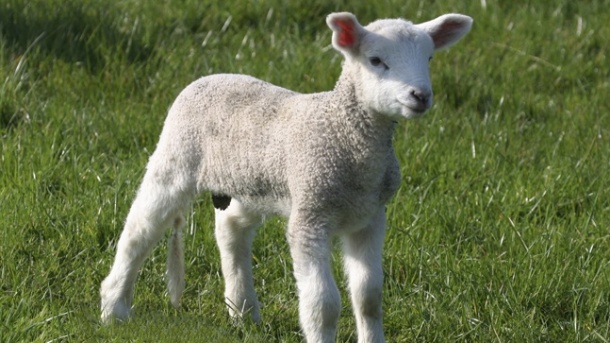
Who do you think of when you think of Jesus? What image comes to mind? For me it’s Ted Neeley from Jesus Christ Superstar. Is it Jim Caviezel, who played Jesus in the Passion of the Christ? What is your image of Jesus? Is he a tree-huggin’, sandal-wearin’, peace-lovin’, granola-eatin’, kumbaya singin’ hippie or is he a king sitting on a throne? Is he a warrior or is he a Santa Claus figure who gives us gifts if we’re good? When you think of Jesus, do you think of a lion or do you think of a lamb? Because in today’s Gospel, John the Baptist sees Jesus and he says, “Behold the Lamb of God…” And we sing it at every Mass, “Lamb of God you take away the sins of the world…” and it’s in the Gloria, “Lord, God, Lamb of God, Son of the Father”. We hear it at every Mass, “This is the Lamb of God who takes away the sin of the world…” but we don’t really think of Jesus as a lamb, do we? Jesus is a shepherd, but, a lamb? God as a sheep? Really? God is not a sheep. Sheep are dumb (and I mean, they are not very intelligent animals). And lambs are defenceless. If you had to choose between being a lion or a lamb, which would you choose? I would choose a lion. No one messes with a lion.
Read more…


 deacon pedro