
A reflection on Mark 7, 1-8, 14-15, 21-23 and Mark 12:28-34

Sh’ma Yisrael Adonai Eloheinu Adonai Eḥad. These are words that every Jewish person knows: Hear, O Israel: the Lord is our God, the Lord is One.
In the Book of Deuteronomy, Moses presents two ways of living our relationship with God. First, it sounds like it’s all about the rules. Moses tells the people, ‘you have to follow these rules or else you won’t make it into the Promised Land. You have to learn them and teach them to your children and you can’t add anything to them or take anything away from them.’ It doesn’t matter why you follow these rules; just do it. But if you read with careful attention, you would see that if you follow these rules, ‘if you observe them diligently, this will show your wisdom and discernment’ (Deut 4:1-2, 6-8). Well, if you’re using wisdom and discernment, then you’re not just following the rules blindly! If you’re using wisdom and discernment, it means that you’re understanding the law and thinking about it; you’re not just following the letter of the law; but you’re understanding the spirit of the law.
So you have the letter of the law, what you have to do. A chapter later Moses tells them what they have to do: The 10 Commandments. This is where all Catholic moral teaching comes from: The 10 Commandments; pretty important stuff.
But then you have the spirit of the law: This is why you should follow these commandments. Moses gives them that a chapter later with what has become the prayer that every Jewish person knows, the Sh’ma Israel: Hear, O Israel, the Lord is our God, the Lord is one. You shall love the Lord your God with all your heart, with all your soul and with all your might (Deut 6:4-5). That’s the spirit of the law. That’s why we do it. Because of love.
Read more…
First published November 2, 2011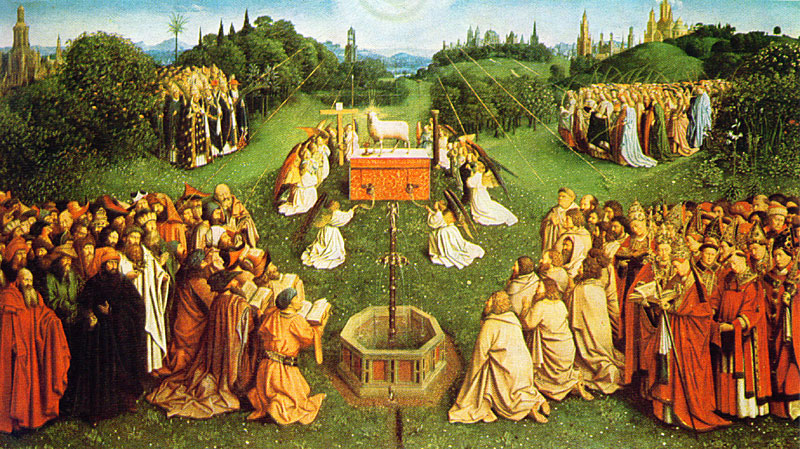
Yesterday we looked at the Book of Revelation and how it is a powerful reminder to those who too easily compromise their beliefs. This message is clear right from the beginning of the book with the letters to the seven churches.
After the letters to the seven churches, and after the first vision of the Throne Room of Heaven (Rev 4:5), we arrive at Chapter 5. There is a scroll and no one can open it, except the Lion of Judah (Rev 5:5). Anyone of Jewish origin at the time would have recognized the Lion of Judah to be the Messiah. But when John turns to see the Lion, all he sees is a Lamb (Rev 5:6). Again, I think that most Christians at the time would know who “the Lamb” is. The Lamb proceeds to open the seal and there are seven seals and the opening of each seal sets in motion a series of events that are described (Rev 6).
Just before the seventh seal is opened, we have this heavenly interlude, which is the first reading on the Solemnity of All Saints. All of the sudden we hear about these “servants” of God who will be marked with a seal on their foreheads (Rev 7:3). This is an echo of Ezekiel 9:4-8 where there is a similar marking to spare a group of people from death (not unlike the marking with the blood of the lamb on the doorposts for Passover in Exodus 12:7, 13). In Ezekiel, they are marked with the Hebrew letter “Tau”, which is very similar to the shape of a cross. It is possible that for early Christians, this comment in Revelation would have been clearly referring to those who are marked with the Sign of the Cross.
Read more…

Last night, speaking with my kids about what costumes would be suitable for Halloween (the oldest went as St. Nicholas and the youngest as a shepherd –- we decided he’d be the “Good Shepherd”) it occurred to me that some characters from the Book of Revelation would probably make for good costumes. And then I thought of today’s first reading, one of my favourite Scripture passages:
”And there was a great multitude that no one could count, from every nation, from all tribes and peoples and languages.”
This is how the Book of Revelation describes a heavenly scene –- a scene where there are countless numbers of people, myriads of angels, heavenly creatures, all the souls of the just -– all of them, standing before the throne of God, in eternal worship.
Today we celebrate the Solemnity of All Saints. As Catholics, we love Saints, we honour them, we learn from them, we let them intercede for us, pray for us. For some people, this idea of “saints” may be confusing, but it’s clear from a quick read of the Book of Revelation that the idea of “saints in heaven” makes perfect sense.
Read more…
First published October 31, 2011
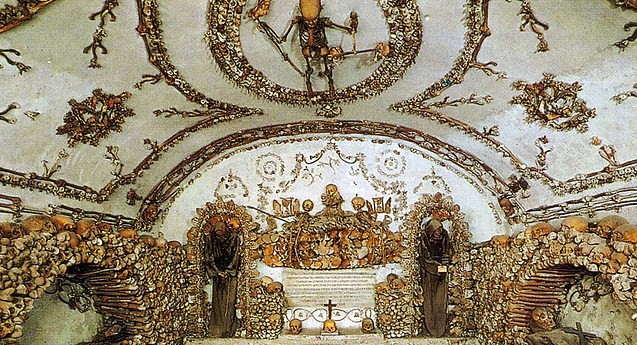
I have many friends who do not participate in Halloween activities. They refuse to do so because they believe that Halloween is a pagan holiday. Some even go as far as saying that it is a Satanic feast.
I’ve always felt that there’s nothing wrong with participating in Halloween activities. After all, I don’t believe that when we dress up or go door-to-door looking for free candy, we are celebrating anything in particular. But, I too have heard about the Celtic Samhain festival of harvest and I do believe that there are crazy things that happen today on Halloween night, even occult rituals. So I went to do some research.
Turns out that most of our present-day Halloween traditions are deeply rooted, not just in our Catholic faith, but in specific activities that were done in order to celebrate our saints and the souls of the dead.
As you know, Halloween is an abbreviation of the term “All Hallow’s Eve,” which means “the eve of All Saints” (“hallow” means holy). I don’t need to tell you that, since the first century, Christians have been celebrating and remembering the “spirits and souls of the just.”
Read more…


 deacon pedro