
First published November 9, 2009
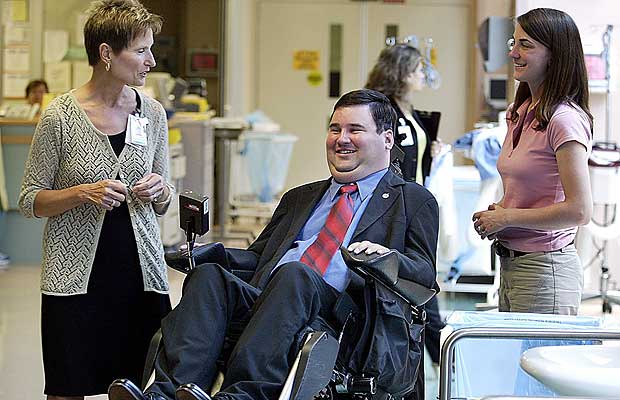
MP Steve Fletcher
Last week Canadian Member of Parliament for the Winnipeg-area riding of Charleswood-St. James-Assiniboia, Steven Fletcher, who is a Quadriplegic has stated he will abstain from voting on the right-to-die bill, C-384, which is currently going to its second reading in the House of Commons. This bill would allow people with terminal illness and those in severe untreatable physical or mental pain, to qualify for medical assistance to hasten their deaths. Even though the bill — which was tabled for the first time in 2005 by Bloq Quebecois MP Francine Lalonde of the riding of La Pointe-de-l’Île — states that the patient would have to be over 18 years-old, have to be lucid, have to request death on two occasions, and the doctor would have to get a second physicians opinion, critics say it is too broad and any such law would lead to the “slippery slope” that would make certain people more vulnerable. This is not new information – and it is exactly the disabled community that feels most threatened by euthanasia and assisted suicide. This is why Mr. Fletcher’s comments on the matter carry special weight.
Mr. Fletcher has said that he supports euthanasia, but believes people should be helped to choose life.
I don’t get it.
Does he not understand that once the law says that killing is OK under certain circumstances, people’s attitudes will begin to change: the law says it’s OK, then it must be OK– and that’s where the slippery slope begins. We can predict a future where killing will be acceptable as an appropriate response to pain or whenever anyone feels inconvenienced.
Mr. Fletcher was left paralyzed from the neck down after his car collided with a moose in a Manitoba highway, when he was 23-years old. He has admitted that had he had a choice, because the pain was so unbearable, he would have ended his life. But it was the support of his family and community that carried him through and gave him the hope he needed to continue. His successful career as a Federal Cabinet Minister is proof that all people are valuable and despite physical barriers, can lead a productive life. He is a symbol of hope for the disabled community.
Mr. Fletcher says that he is abstaining from the vote in order to encourage dialogue.
I see it as a cop-out.
If he believes people should be helped to choose life, and that the bill is too broad, then he should vote against it. And be glad that Euthanasia was not legal at the time of his accident or he would not be here today to be having this conversation.
If you want to know more about this issue, I encourage you to get your hands on our production Turning the Tide, which looks at all these issues and clearly shows the fears expressed by many in the disabled community, and to read what I wrote on this topic a few years ago click HERE and HERE.
If you really want to stay informed, visit the Euthanasia Prevention Coalition for the most up-to-date news and information.
As we approach the voting day for Bill C-384 (the date of the vote keeps changing, so we don’t know when it will be, as of today it’s scheduled for Nov 19th), I will be posting a three-part article I wrote in 2007, which also will help you understand these issues better. Stay tuned.
Pedro
First published June 26, 2009
 Yesterday at S+L TV, my time was divided between three editing assignments. In one room, I am working on the promotional video for the permanent diaconate formation program for the Archdiocese of Toronto. The permanent diaconate is one of three orders within the Catholic Church (the diaconate, priesthood and episcopate). The deacons are ordained ministers who are active in the ministry of service. They visit hospitals, nursing homes, and prisons, and work with the most marginalized of our society. One of the particular ministries we are focusing in the video is a ministry to ex-offenders and, in particular, to men who have done time for sexually assaulting children. It has been the topic of many conversations in the office: to what extent are we called, as Christians, to minister to these people? Where do we draw the line?
 The second project I was editing was this week’s Salt + Light Radio program. The main interview on this show is with Harry Nigh, a Mennonite minister who is also the Community Chaplain for the Central Ontario Parole Sector for Correctional Services Canada. Our interview for the radio program centres around his “circle of support” ministry that is part of the restorative justice movement whereby ex-offenders are welcomed into a circle of friendship meant to support him (or her) so that they do not re-offend. This program has been met with a great deal of success, namely in reducing the number of victims. The first man Harry’s group supported was a high-profile pedophile named Charlie. The group called itself “Charlie’s Angels”. Charlie lived the rest of his life without re-offending.
The third program we were editing is an episode of Catholic Focus titled “Making Movies that Count”, featuring an interview I did with Steve McEveety last November when I was in Houston. Steve McEveety is the C.E.O. of MPower Pictures, responsible for movies such as “Bella”, “Star of Bethlehem”, “An American Carol”, and “The Stoning of Soraya M.”, which will be coming to theatres at the end of this week. Before MPower Pictures, Steve was a producer with Mel Gibson’s ICON Productions and was the executive producer of many Gibson films including “A Man Without a Face”, “What Women Want”, “Braveheart”, and “The Passion of the Christ”. (This episode will air next Thursday, July 2nd.)
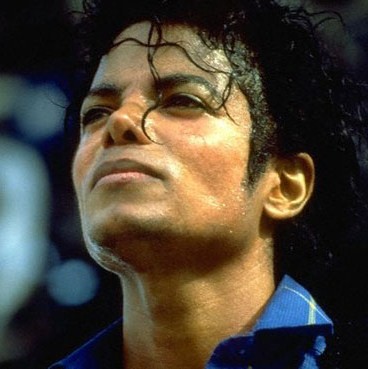
After a full day of this, an event happened that seemed to bring everything together: I heard reports that Michael Jackson had died. My initial reaction was that he had been an icon. Whether we liked him or not, liked his music or not, or his seemingly bizarre lifestyle, or whatever, we cannot deny that this was the death of a legend – he was the King of Pop. I also thought that it had been the end of a tragic and sad life–but that is me judging a man I know not.
On the poster of the film “Braveheart” reads the caption: “Every man dies; not every man really lives.” I wondered if Michael Jackson really lived. He certainly accomplished a lot. You could say that by the time he was 10 years old he had accomplished a lot, but did he really live? Was it all worth it?
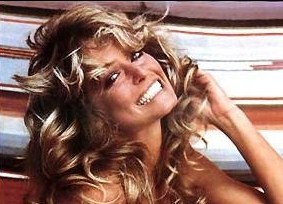
Soon afterwards, I heard Farrah Fawcett had also died. This news made me a little sad. I was too young to have been a faithful “Charlie’s Angels” fan, but young or not, who could not have noticed Farrah Fawcett in the early 70’s? She too was an icon. The native of Corpus Christi, Texas, died after a long battle with anal cancer, a battle she documented in the NBC documentary “Farrah’s Story”. It was hard not to compare her struggle with Jackson’s.
Allegations about Jackson’s sexual abuse of minors have always remained just that–allegations. Still, people will judge. The same judgments can be made about someone who chooses to take her battle with cancer to the small screen. Making suffering public is not something many people are comfortable with.
But you see, just as those deacons in that promo video, we are all called to service, but a service that means not judging–a service that means welcoming all. The work Harry Nigh is doing may be difficult for many to stomach, but it is not rocket science. When Jesus said to visit those in prison he didn’t just mean those who’ve been imprisoned unjustly, he meant all prisoners. He meant pedophiles too. We are all from Corpus Christi: the Body of Christ.
As I walked out of the office and I was thinking about all of this, it began to rain. The sun was still shining and, in the distance, I saw a rainbow. Still, I was feeling a little sad. A bit sad for when the pop idols of your childhood begin to die, it says something about your own age. But mostly I was sad because I was reminded of those who struggle with painful kinds of cancer and who struggle to find meaning through it all. I was sad for those who throughout their whole lives struggle to find meaning. I was reminded of the many who feel like strangers in their own skin. But most of all, that rainbow reminded me of the work that we all must do to welcome and be friendly to all–the call to love without judgment and without condition. And then, perhaps, when I die, those left behind can truly say that I really lived.
First published June 11, 2009
 Before I begin to untangle myself out of this noodle soup I’ve cooked, can I draw your attention to a comment that came from Jason Gennaro — Jason makes an excellent comment that every definition about Marriage has to include God in it. So true. In my defense (and Jason has indeed humbled me), I must say that my hope is always to bring the Good News to those outside of the Church, those for whom the word God means nothing and so when explaining some of these things, I try to do so from a secular point of view – sometimes using religious language alienates people more – plus, it is my belief that if something is truly from God, then it should make sense from a natural perspective as well. Nevertheless, Jason definitely gets the “best-comment-of-the-week” award.
Another comment came that made me realize that, in my attempt to be interesting, I’ve been more successful at confusion than anything else. It was a personal message I received from a friend who wished to remain anonymous. He writes:
I’m trying to figure out what you are saying about marriage in your post on the S+L blog. I’m seriously lost… on one hand you seem to be implying that gay people having sex implies… disease, heartache etc. On the other hand you seem to imply that straight marriage is a guarantee against all those things, and that marriage is identified primarily as sex. Am I missing something? I hope you’re not saying either those things. I would appreciate some help understanding.
Here’s my response:
First of all, can I thank you for giving me the benefit of the doubt and not dismissing my muddled ideas as some crazy quack?
Second, I think it’s important to remember that I am talking about ideas here and ideas are always clear – even if I am not clear with them – it’s when we try to apply them to the real world that things get muddy and, while I do think the practical application is important, I want to stay in the realm of ideas for now.
I am not talking about homosexual or heterosexual relationships. Let’s leave all of that aside. I am trying to define marriage, or rather, trying to determine what the true nature of marriage is.
We may find that the true nature of marriage does not have a practical application – but again, I am talking about ideas here. So – I would like to argue that the nature of marriage, God’s design for marriage, if you will, is a relationship within which sex is guaranteed to not cause any complications.
That doesn’t mean that heterosexual marriage is a guarantee against problems – no… it means that in a “true” marriage, sexual intercourse is guaranteed not to lead to any problems because as soon as you encounter problems, it’s because the sex has been used against its true nature.”
There was also a comment after my last entry challenging this whole exercise of trying to define Marriage. Let me just say in response that we are not trying to re-define Marriage. I am merely trying to be able to explain why the Church teaches that a Marriage is between a man and a woman. Why can’t it be between two people of the same sex? If it’s about love, why not? That’s what this exercise is about. But I want you to think about it, not just blindly learn what the Church teaches. So here we go: What is the true nature of marriage? Let’s find out using Natural Law.
All Catholic Moral Teaching is based on Natural Law. The whole universe is guided and ruled by laws: the laws of physics (like gravity) and mathematical laws (2+2 always will equal 4), for example. This is the universe God created.
Natural Law is the law that says that all things work best or yield the best results when used according to their nature. So that means that if I want to grow tomatoes I have to plant them outside, in the sun, water them every day, etc. That is their nature. If I put them in the closet and forget about them I won’t get any tomatoes because that is against their nature. The same applies to everything, not just things of nature. If I want my car to run, I have to put gas in the tank. If I put peanut butter in the tank, the car is not going to run – in fact, I will probably have to get a new car. So, my car will work best or yield the best results when used according to its nature, which includes putting gas in the tank. Incidentally, my car with its over 326,000KM is no longer working very well – chances are that is because it’s not its nature to last so long.
The reverse is also true: in order to find out the true nature of something, we need to see how it works best and/or yields the best results. If I want to know what the nature of the human body is, I have to see what makes the body work best. For example, drinking 8 glasses of water a day, eating well-balanced meals, exercising, sleeping 8-9 hours every night (I wish!), having a balance between work, rest, prayer and play – those things have proven to help the body work best – so it tells us something about the nature of the human body.
In order to find out the true nature of sex, for example, by using the Natural Law, we have to see what makes (or in what circumstances does) sex work best or yield the best results. Are you with me?
Therefore, what makes sex not lead to any problems, heartaches, disease, issues, or pain? (Remember we are talking about ideas here – the practical application may be slightly different.) If there is a perfect design by God, of sex, then it is a sex that doesn’t lead to any complications, heartaches, disease, issues or pain of any kind. I would say that we can agree that is the true nature of sex.
Can we imagine for a minute a relationship within which sex is used according to its true nature, its true design? A relationship where there is no abuse, no infidelity, no conditions, no manipulation, nothing held back, complete freedom, consent and understanding, and total self-giving? I would like to think that is a relationship within which sex does not lead to any complications of any kind.
Does that relationship exist? Sure. We call it Marriage.
I firmly believe that if you go down the list: infidelity, teen-age or immature marriages, forced marriages, marital rape, spousal abuse, anal or oral intercourse, masturbation, contraceptive mentality, friends-with-benefits, pre-marital sex, having too much sex (the list can go on); and you apply the rule of Natural Law, you will find that none of these situations offer the guarantee of no complications. Therefore, they do not belong within the relationship that we call Marriage.
Let me say it in a slightly different way: I am not defining Marriage in terms of sex – I am simply saying that the true nature of sex (where it is guaranteed not to lead to any complications) can only exist within Marriage, as defined by the Church, based on Natural Law (and supported by Sacred Scripture and Tradition).
Now let me just be clear: I am not trying to qualify any marriages or judge marriages. We all struggle in marriage and mine is no better than most (remember we are talking about ideas here). I am merely trying to understand WHY the Church teaches what she teaches about Marriage. There are countless married couples that have struggled through lies, cheating, infidelity, STDs, abortion, sexual disorders, abuse, manipulation and who knows what else, and that are still fairly healthy marriages, because in the end love, forgiveness and repentance have triumphed. But I can tell you with a high degree of certainty that including these practices in your marriage will not guarantee you a healthy marriage or a healthy sexual relationship within that marriage.
The key word here is “guarantee.” If you stick to the true nature of sex (as defined above through Natural Law), which is God’s design for sex, you will be guaranteed to not have any problems, heartaches, disease, issues or pain.
So, back to our original question: What is a true Marriage? According to JPII’s Theology of the Body, it is a love-relationship that is free, faithful, fruitful and total between two consenting adults of the opposite sex who are open to life. But let me add this: Marriage is also the institution created by God to safeguard the true nature of sex. Why? Because in a “true” marriage, sexual intercourse is guaranteed not to lead to any problems, because as soon as you encounter problems, it’s because the sex has been used against its true nature.
Am I defining Marriage in terms of sex? Perhaps – that seems to be the only factor that separates marriage from any other love-relationship (sure you can have sex outside of marriage, but like I said, that won’t offer a “no complications guarantee”). If we define Marriage purely in terms of love, that doesn’t explain why it needs to be between two adults, or between two people of the opposite sex, or why two siblings shouldn’t be married, or why 3 people can’t be married to each other.
All human relationships must include love. All friendly relationships must be faithful, free and must yield good fruit (otherwise they are not loving, and therefore will not work best or yield the best results). Once a relationship becomes a sexual one, the only guarantee that there will be no complications is if it is within a love-relationship that is free, faithful, fruitful and total, between two consenting, mature adults of the opposite sex, who are open to life. That relationship is what the Church calls Marriage. So, yes, while Marriage is not defined based on sex alone, the true nature of Marriage is directly related to the true nature of sex.
Next time someone challenges your belief that Marriage can only be between a man and a woman, explain them this. I’m sure it’ll help.
Happy to write more on this. Even happier to read your comments.
Read Comments
 A couple of weeks ago I posted an entry titled: What If I Was Miss California – and I wondered how I would answer if I was asked the same question she was asked, on national television.
The question is: Do you believe every State (in the U.S.) should legalise same-sex marriage?
My response would be that whether same-sex marriage is legal or not is not the real question. The real question for me is “what is marriage?” And that is what I tried to answer. Here’s what I came up with:
A Marriage is a relationship within which sex is guaranteed not to cause any problems, heartaches, disease, issues or any pain.
This of course, created some confusion – but that’s good, ‘cause I needed to explain it first. But I wanted to hear if anyone could come up with another definition for Marriage. Instead, we received two responses.
Fearghus writes:
It’s fine for me that Carrie Prejean has her viewpoint so long as she doesn’t seek to impose it on me. I’m also sorry that she was discriminated against for holding those views because we know that discrimination is wrong, don’t we?
Now the much thornier issue in your post is a definition of marriage that is focused on sex. Love always seems to me a more valuable focus and where does your definition leave those heterosexual couples who no longer have sex. And what of those heterosexual marriages where sex is the cause of heartache, disease, issue and pain? There are no guarantees who ever you are and who ever you love. That’s why we have faith in each other, in the people we love, and yes, in God.
Perhaps I’ve misunderstood you and look forward to reading your explanation.
I responded:
Thanks Fearghus for your post. You make a very good point, and one that I’ve struggled with for the past years – if Marriage ONLY has to do with love, then what sets marriage apart from any other loving relationship? Why is two friends who love each other living together, not a marriage? Why are two lovers who live miles apart, not necessarily a marriage?
Why do we think that a sex-less relationship can be a marriage, but one that is not healthy, but full of sex, is? Doesn’t make sense to me.
For those of us who strive to understand the world from a Christian/Biblical point of view, why is there marriage at all? Why has the Church (and Christ) elevated it to the level of Sacrament?For these questions and more, I am more and more beginning to be convinced that there is something about marriage that has to do with procreation and not just the “making” of the babies, but the bringing them up. This is in fact going to be the point of my next blog entry – once I hear more from people like you.
Having thought about it a bit longer, I also want to say to Fearghus that the Church is not “imposing” her view on anyone. No one is telling anyone what to do. The Church simply believes to be teaching God’s design for Marriage. People can still go ahead and do whatever they want – and they do.
Another comment came from Celia, who writes:
I’m truly confused Pedro,
If I’m correct you are trying to establish that Marriage is the union where a couple loves each other, has sex with each other and raise children together. My parents had in my opinion, what I use in my personal life as a definition of Marriage. They trusted each other to have the same principles when related to life, they had the same beliefs when related to Faith, they truly did for the other the best that they could because that is what their partner would have done for them; and they assumed all the responsibilities that two adults have when committing to have children together; to raise and teach their children on the best of their abilities and with the faith and principles that they were raised with…
I think that in bringing the marriage definition for discussion we transform in questioning all beliefs and maybe our unconditional faith… Leaving our next generation with very little to work with.
How do you explain to a young couple that the only difference in between living together and marriage is the fact that they can have “a relationship within which sex is guaranteed not to cause any problems, heartaches, disease, issues or any pain” and raise children together? In a society where the easiest way out is the one that we pick I believe that by doing that you are saying…Marriage is not a good option, it brings lots of headaches and responsibilities and make all the good things that you feel that really make you want to get married eventually go away and you are left with responsibilities only…No wonder the indices of divorced are so high!
I responded:
Celia,
I hear what you’re saying – and that is in fact the biggest challenge we have: how do we explain this to young people? And I am a firm believer in beginning to teach these things about love, sex, marriage and relationships to our children from the time they are very young, because you can’t explain it in one blog entry. It takes a long time to teach, explain and understand.
What I would say to young people is this: Don’t you want to be in a relationship that is guaranteed to not have any problems? Do you want to be guaranteed to not have any pain, any disease? Who wants to have broken hearts? No one, right? Well then let’s teach them how to have healthy relationships. Marriage is the only relationship within which sex can be healthy. That’s what I mean. I don’t mean that marriage is only about sex. For sex to be healthy, love has to be part of it. So, of course, love is an integral part of the equation, but love is not specific to the marriage relationship.
Anyway, I love the comments – I will write a new blog entry with a clearer explanation of my definition of marriage – but let me say for now that a marriage is not a marriage if it is not free, faithful, fruitful and total. I believe that if we stick to those criteria for marriage, then sex within that relationship will always be healthy and good.
I hope that makes sense.
I hesitate to write too much more at this point. I really am curious how other people would define marriage. But here’s my problem: If we say that “Marriage is the loving union between two consenting adults of the opposite sex” that doesn’t explain why. What I am trying to get to is that marriage is the institution created by God to safeguard the family. If it is meant to safeguard the family, it has to safeguard sex (because without sex there is no family) and so we go from there.
But now, it’s your turn. More on this later.


 deacon pedro