
First published December 25, 2009
It seems that every year we have the same discussion around this time: what is the real meaning of Christmas? and let’s keep Christ in Christmas. There are even campaigns to boycott department stores that refuse to acknowledge the “reason for the season.” It’s so easy to jump onto that band wagon.
 To add to this, “Christmas” starts right after U.S. Thanksgiving. In Canada, some stores already have Christmas merchandise and decorations after Halloween. On my street we’ve had houses with lights for a month already; some of my neighbours have had their tree up since the end of November. I am of the belief that the lights should be lit on Christmas Eve, and then we celebrate Christmas during the Christmas season, not during the Advent season.
There are at least two radio stations that claim to be Toronto’s Official Christmas station. For a month now they’ve been playing Christmas music exclusively. In previous years I could not stand this. Nothing spoils your Advent as having to listen to Wham’s Last Christmas every day starting on December 3rd!
But while driving home the other night I realised something quite profound: at no other time of the year will radio stations play Christian music. What I mean here is that Christmas music is Christian music. I don’t mean Mariah Carey singing All I Want For Christmas is You. I mean the Barenaked Ladies and Sarah MacLachlan singing God Rest Ye Merry Gentlemen. I mean David Bowie and Bing Crosby singing Little Drummer Boy-Peace on Earth. Regardless of the intent, these lyrics are helping us focus on the reason for the season and proclaiming Jesus Christ.
So, I’m driving in my car and on comes Boney M singing their wonderful rendition of Mary’s Boy Child. I love that song! And it’s not just a nice Christmas song. In their arrangement they go out of their way to make a point:
Oh My Lord, You sent Your son to save us
Oh My Lord, Your very self You gave us
Oh My Lord, that sin may not enslave us, and love may reign once more.
This on secular radio!
And the other night, on my way home I heard a new Christmas song – I almost had to pull over to really try and understand the lyrics. This is what I heard:
You’d say that today holds something special
Something holy and not superficial
So here’s to the birthday boy who saved our lives
It’s something we all try to ignore
I later found out this is Taylor Swift’s new song, Christmas Must be Something More, a song that very clearly says that Christmas is about the birth of Jesus and that is not scared to say the name of Jesus. This on a secular radio station.
So – I’m going to be a little less judgmental from now on – if radio stations want to start playing Christmas music from December 1st, that’s OK for me, because, Advent or not, any time is a good time to proclaim the name of Jesus on radio!
So if you’re looking for something to do on December 26th, after all the turkey and eggnog, tune in to Salt + Light Radio on the Catholic Channel (Sirius XM 129 at 10pm ET). As Mary Rose mentioned yesterday on the blog, join us for our Christmas special, featuring some of our favourite Christmas songs (and some new ones), and some wonderful reflections and thoughts to carry you through the Christmas season. If you don’t have satellite radio, no worries, you can podcast the show at www.saltandlighttv.org/radio
If Taylor Swift is not scared to proclaim it, neither should we: Christmas must be something more!
Published December 19, 2009
Exactly 20 years ago I was at a nightclub in Panama, where I had gone to spend my Christmas holidays. I had just gone for dinner with my brother and his new girlfriend and gone to watch the movie Sea of Love, with Al Pacino. Just after midnight, the owner of the club shut the music off, made an announcement that there were “disturbances” and that we should all finish our drinks and go home.
We knew what “disturbances” meant – for the last weeks there had been several mini-clashes between the Panamanian military and American soldiers stationed in Panama, which had led General Manuel Noriega to go on national television and declare that Panama was in a state of war against the U.S.
As my friends and I made our way to one their homes, we passed three U.S. army trucks rolling down one of Panama city’s main avenues – and we knew these were not just normal disturbances. Thus began one of the most surreal and life-altering nights in my life – anyone who’s been in a war can probably say the same.
We stayed up all night as we heard bomb blasts, and airplanes and choppers flying overhead. In the distance, out the window, we could see fires from the blasts — at the airport and in the other direction at the Panamanian Defense Forces headquarters. We followed the developments on radio and television… this was what made it surreal: it was all televised! We could watch the live coverage!
This was Operation Just Cause, the U.S. invasion of Panama, carried out to protect the Panama Canal, to capture dictator Manuel Noriega and to return the country to democracy.
For the next week, leading us to Christmas, I experienced the real meaning of the holiday, as we were in a city in lock-down, with limited mobility, with army tanks and trucks parked on the side of the road and street barricades reinforced with U.S. army-issued barbed wire.
Operation Just Cause was exactly that – a just cause. Not that violence is ever warranted, but we do believe in the concept of a just war. But let me be really clear: I am not speaking about Vietnam or Grenada or Iraq – I am very specifically speaking about the invasion of Panama 20 years ago. In my opinion, and in the opinion of millions of Panamanians, it was a successful mission – it lasted about 8 hours and the so-called occupation lasted 2 weeks. About 500 people lost their lives and that is very serious. Many ended up in mass graves, and many, many thousands lost their homes, but Panama today is a much better place because the three goals of Operation Just Cause were achieved. Panama is now a democracy, no longer recovering, but thriving. So tonight, please join me in remembering the people who lost their lives 20 years ago – and in thanksgiving for how God has blessed the Panamanian people despite, or rather, in the midst of our struggles.
First published November 26, 2009
I had been explaining some red-flags that I found in the book Final Exit by Derek Humphry (see Part II, and also Part I), and ended up talking about relativism: you may not want euthanasia for yourself, but don’t impose your beliefs on someone else, which is the number one flaw with this book, and with the thinking of anyone who is actually considering that euthanasia or assisted suicide are viable options. We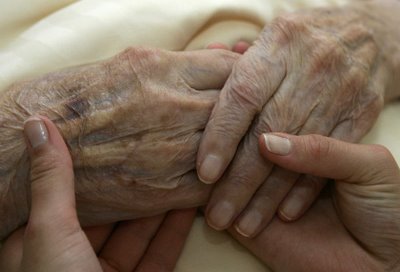 can’t all come up with these things on our own. Your personal autonomy shouldn’t be permitted to trump the safety and well-being of society. In the words of disability-rights-activist Catherine Frazee (she used to be the chair of the Ontario Human Rights Commission), “It’s not about the particularities of a law and what it prevents and prohibits. It’s much more about the messages of the law and how those messages get translated into a social and cultural order.” (Catherine is featured in our documentary on Euthanasia, Turning the Tide, which I produced for S+L Television in cooperation with the Euthanasia Prevention Coalition back in 2006.)
I spoke to Derek Humphry at the Right to Die Conference in Toronto in 2006. I said to him that I found his book compelling (which is true). But I had one difficulty and that was his use of the word “dignity.” I said that when people who believe in God use the word “dignity” I understand what they mean. But when someone, who doesn’t believe in God uses that word, it’s meaningless. I don’t know what they mean. So I asked, “what do you mean when you say “dignity?” Guess what? He couldn’t answer me. He mumbled something about how we all have to come up with our own definitions.
But I looked it up:
Dig•ni•ty Pronunciation: ‘dig-n&-tE Function: noun
Etymology: Middle English dignete, from Anglo-French digneté, from Latin dignitat-, dignitas, from dignus
1 : the quality or state of being worthy, honoured, or esteemed
2 a : high rank, office, or position b : a legal title of nobility or honour
3 archaic : DIGNITARY
4 : formal reserve or seriousness of manner, appearance, or language
I don’t think he meant “high rank, office or position” or anything about manner or language. He means “the quality or state of being worthy.”
People! If you don’t believe in God, from where does your dignity come? Nowhere. That’s where. There is no reason to consider human life of any value whatsoever if we believe we are an accident of evolution and if you don’t believe there is anything after this life. That makes no sense. I’m not saying you have to believe in God or in the afterlife, but if you don’t, don’t go around pretending that human life has value and worth. I’ve said this before, without God, we would be subject to entropy, which only leads to disorder and death. As soon as you accept that there is dignity in life, you have to accept that there is dignity in all life. I don’t think anyone (except Bioethicist, Peter Singer, who thinks babies who are born disabled should be euthanized, a practice which now takes place, legally in Holland), wants to open that can of worms. I’m not going to decide which life is valuable and which one isn’t. Is Teague Johnson’s life valuable, because he was loved by his parents? And was Tracey Latimer not valuable? (She was also disabled, but his father killed her to rid her of her pain, he claimed). Was Terri Schiavo’s life not valuable (her brother, Bobby Schindler is also featured in Turning the Tide)? Are we suggesting that laws can be formulated to tell us whose life is valuable and whose isn’t? Oh, wait. We can decide if our own life is valuable. That’s what leads hundreds of depressed teen-agers to commit suicide every year. But, it’s ok. They can decide for themselves. That’s autonomy. No need spending any money on suicide prevention week.
Which leads me to my last point which has to do with this concept of quality of life. According to Humphry, self-deliverance should be an option when our quality of life has been reduced to mere existence. But wait, I thought that existence was the criteria for life. Are there really people out there who believe that one life is more valuable than another? (Oh, yes, Peter Singer, I forgot ? He’s a Professor of Bioethics at Princeton). If you have life, then you have quality. Is it right for a depressed teen-ager that believes his life has no quality to kill himself? No. To that person we offer counselling and help. We go into suicide-prevention mode (trust me, I worked at Covenant House). But if that person is hopelessly, terminally ill, then compassion means helping them end it. Don’t you see there can’t be a double standard here? If we tell that person who is terminally ill that it’s ok to end their life, then we are actually saying that their life is not as worthy as another life. Your quality of life does not come from what you are able to do or not do; it comes from who you are. It comes from your relationships; how you relate to others. Any disabled person will tell you that. Compassion means giving them the proper pain control (not just physical pain, but also emotional pain) and being with them, loving them, caring for them, making them feel worthy. What we need in Canada is not legalised euthanasia or assisted suicide, what we need is better palliative care.
Anyway, Humphry continues and explains the different kinds of Euthanasia: Passive Euthanasia, Self-deliverance, Assisted Suicide and Active Euthanasia. Let me explain and clarify a few things for those of you who may be considering this:
- Passive Euthanasia. He says is disconnecting someone from medical life-support equipment without which they cannot live (I’ve already explained that this is NOT euthanasia. Disconnecting someone from an artificial life support system is not euthanasia. It is called withholding extraordinary care. Having someone on a respirator without which their lungs (or heart) would not naturally function is not killing them. They are already dead, without the machine. This is different than ordinary care, like a feeding tube. This is what happened to Terri Schiavo. The courts considered that she was receiving extraordinary care. But feeding someone is not giving them extraordinary care – it’s feeding them. It’s no different than feeding a baby who can’t feed herself. Terri Schiavo didn’t die because they removed a medical life-support system without which she could not live. She died because she was starved to death. Tube or no tube, no one was even allowed to wet her lips with a towel. There’s no dignity, freedom or choice in that.
- Self-Deliverance is suicide. It’s taking your own life.
- Assisted Suicide is Physician Assisted Suicide. A doctor prescribes drugs and then you take them yourself. He doesn’t assist you in taking them, he assists you by prescribing them. But you have to be able to take them yourself.
- Active Euthanasia. This is the only kind of Euthanasia as far as I am concerned. This is when the doctor (or someone else) injects the lethal drugs, because you can’t do it yourself. I would call this homicide (so does the current law in Canada). As if calling it something else will change what it really is (incidentally, this is what’s behind the whole move to call it “assisted dying” instead of “assisted suicide.” If someone assists you in killing yourself, it’s suicide and they should be charged with whatever they charge you with when you counsel and/or help someone commit suicide). Euthanasia can be voluntary (you asked the doctor to do it), or involuntary. Take note: 2400 or so cases of euthanasia and assisted suicide are reported each year in Holland. But in 1991, the Dutch Government conducted a study that found that there were actually closer to 12,000 assisted suicides that year. Of these, the patient did not request or consent to being killed in close to 6,000 cases. One of the doctors explained that it would have been “rude” to discuss the matter with the patients, as they all “knew that their conditions were incurable.” So there you have it. It’s rude to bring it up, so assume that that’s what they want and go ahead and kill them. Great. So much for safeguards.
For the record, the Euthanasia Prevention Coalition in Canada defines Euthanasia as: to intentionally cause death by action or omission of an action, for allegedly merciful reasons. And Assisted suicide is to knowingly provide the means for a person to kill him or herself.
So there you have it. If you want personal control and choice over your final exit (all the world’s a stage), this book will help. I’m sorry this is so long. But we need to let Canadians know the dangers of this euthanasia mentality. Once we legalise something, it becomes part of our collective belief system. I truly believe that. So, legalising it today, means that three generations from now, it will be commonly accepted that it’s ok to resort to killing in order to deal with difficult situations. That’s the slippery slope. And there are no safeguards that will work. Once we accept that killing is ok in order to relive suffering, killing will be the norm. And next thing you know, killing will be acceptable to rid us of other inconveniences.
For more information you can contact the Euthanasia Prevention Coalition, the International Task Force on Euthanasia and Assisted Suicide or the Catholic Organization for Life and Family.
On December 1, Bill C-384 will be getting it’s second hour of debate in the House of Commons, and a second hour and vote the next day. This bill, if passed would legalise Euthanasia and Assisted suicide in Canada. If this concerns you (and it should), find out more, let others know, write to your MP and your newspapers and pray.
Send me your comments.
Pedro
Frist published November 24, 2009
In Part I, I gave a background on the author of the book Final Exit, Mr. Derek Humphry and the Right-to-Die people. I do believe that the book is very compelling, but it contains some red flags. Here are some of them:
 He is very proud of his book. I cannot mention the number of times he refers to his book and how many people read it and said it was the next best thing since sliced bread and who killed themselves and left the book on their bedside table (to make a statement, in fact, this is one of his suggestions if you do kill yourself – sorry, “deliver yourself”: leave this book on the bedside table so those who find you know exactly that you planned it yourself and no one helped you.
He also talks a lot about choice. Sounds a lot like those pro-abortion people. Choice? Choice in what? Killing myself? Is there actually an argument there? Pretty soon, once we accept that it’s legally OK to kill another human being (we’re close), we will claim that it is our basic human right to have options in how we kill each other. Choice is for the Mandarin Chinese Buffet, not for killing. But that’s how the devil works: in half-truths. No one can deny that having choice is a good thing but really it’s not about choice, you see, it’s about control and the minute we take control, we take control away from God. If you don’t believe in God, of course that it makes sense that you should have control over everything that you do. But control is all about pride and pride is the mother of all sins. Control is why a lot of those things that we don’t think hurt anyone, like contraception, are sinful. Wanting to have control over our lives is what’s responsible for most human destruction, death, divorce, cover-ups, war… you name it. I can’t even think what aspect of my life I should have control over. In all things, God should be in control. So if you hear of a group called Christians for Choice or anything like that, run in the other direction. It’s the devil with his half-truths again. Christianity for choice is an oxymoron (unless who you are choosing is Christ). Christianity for choice might as well be called, “Christianity for Control”, or “Christians Against Christ”. The minute you choose Christ, you have chosen to not choose sin. Murder, suicide or any killing whatsoever, is sin. Remember the 5th commandment?
This is what Humphry says the dilemma is: “should you battle on, take the pain, endure the indignity and await the inevitable end, or should you take control [italics are mine] of the situation and resort to some form of euthanasia which in modern language means, ‘help with a good death’?” I am quoting from the book. I didn’t make this up. But I did look up euthanasia in the dictionary: “the act or practice of killing or permitting the death of hopelessly sick or injured individuals (as persons or domestic animals) in a relatively painless way for reasons of mercy” (Merriam/Webster). I guess a “painless” way for reasons of mercy, equals a “good death”. I would suspect that a good or bad death is directly related to whether you lived a good or bad life, not to the manner in which you die.
Here’s another half truth: ask yourself this question, says Humphry, “Is your God willing to accept your suicide as a justifiable escape from further terminal suffering?” I suppose for someone who is on the fence, they could consider this question. But hey, if you call yourself a follower of Jesus Christ, find a crucifix and look at it. Better yet, go rent the Passion of the Christ, and you tell me if God is willing to accept any human-controlled escape from any suffering? (Not to mention that there is only one God, not “your” god or “my” god).
He uses the compassionate argument: “This is compassion.” He compares this whole thing with putting an animal “out of its misery.” Ok with me, if you consider yourself an animal, and I don’t even think that’s the compassionate thing to do with an animal either. Someone endorsing the book is Isaac Asimov who says, “it’s cruel to allow humans to live in pain in hopelessness, in living death.”
How sad it must be to not believe in anything but yourself. In fact, compassion means, “to suffer with.” That’s compassion. Killing you so you don’t have to suffer, that’s not compassion. It’s the chicken way out! And killing yourself… that’s really dignified?
Humphry talks about freedom and autonomy. He appeals to us using the tolerance argument: We should be “tolerant of others who want the right to chose what happens to their bodies,” and, “to every person their own way of death.” This is the classic euthanasia argument, “if you don’t want it for yourself, that’s ok, but don’t impose your set of beliefs on those who would want it for themselves.” But if we applied that argument to everything, what kind of world would we have? Or does it only apply if it’s doing something to your own body? He says that “life is personal responsibility” and “we must decide for ourselves”. Does he not know that there is such a thing as absolute truth? Truth is not relative. Whether killing (or suicide or self-deliverance or whatever you want to call it) is right or wrong is not relative. Either it’s wrong for everyone, no matter the circumstances, or right for everyone, no matter the circumstances. We can’t make that decision by ourselves. And you certainly can’t draw out a charter delineating when it’s ok to kill and when it isn’t. I don’t think that would work.
I’ll continue in a couple of days. Again, for more resources on Euthanasia and Assisted Suicide visit our Turning the Tide page, Euthanasia Prevention Coalition, or the Catholic Organization for Life and Family site.
Pedro


 deacon pedro