
A reflection for the 22nd Sunday in Ordinary Time, year C. The readings are Sirach 3:17-18, 20, 28-29; Psalm 68; Hebrews 12:18-19, 22-24a and Luke 14:1, 7-14.
“The last shall be first and the first shall be last.” That was last week’s message. Today’s is very similar: “All those who exalt themselves will be humbled, and those who humble themselves will be exalted.” These two messages can be better understood when we recognize that for the last couple of weeks and, in fact, for the next weeks – all the way to the Feast of Christ the King, at the end of November, the end of the Liturgical Year – Jesus is making his way to Jerusalem for the last time. This is it. He’s on his way to Calvary and so all his lessons have to do with salvation. They have to do with God’s mercy and the Kingdom of God. And so we hear a lot of parables, stories and lessons that tell us something about what we need to do to be saved; and today, it has to do with humility.
Humility is an important theme in Jesus’ ministry – not just what he preached but how he lived and how he died. In the Gospel of Luke, humility is also a big theme. It is Luke who gives us the Magnificat – that beautiful prayer that Mary prays when she goes to visit Elizabeth: “He has scattered the proud in their conceit; he has cast down the mighty from their thrones and has lifted up the lowly” (1:51-53). It is also Luke that tells us that “the least among you is the greatest” (9:48) and that the greatest is the one who serves (22:26).
Read more…A reflection for the Solemnity of the Ascension of our Lord, year C. The readings are Acts 1:1-11; Psalm 47; Ephesians 1:17-23 and Luke 24:46-53.
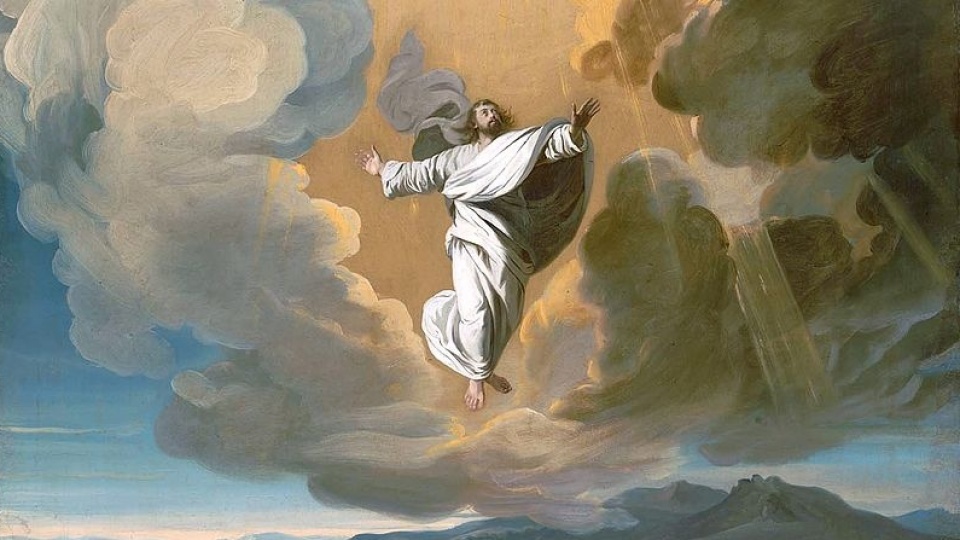
There’s a quote from St. Augustine for this day, the Solemnity of the Ascension, that says: “Our Lord Jesus Christ ascended into heaven; let our hearts ascend with him.” It’s a good reminder that today’s feast is not just about Jesus ascending to be with the Father, like St. Paul says in today’s second reading, to be seated at the right hand of God, above all principalities and authorities, and with and all things beneath his feet, but also that this feast is about how we can also already be in heaven with him. As the opening prayer today says, where Christ ascends in glory, we will follow in hope. Just as he didn’t leave heaven to be with us on earth and remains with us even after his ascension, we too are already in heaven with him, even though what has been promised has not yet been fulfilled. That means that even though our bodies are not yet in heaven, we can start lifting our hearts to heaven with Jesus. And so, I’ve been thinking about what it means to “lift up our hearts”. We say it at every Mass: “The Lord be with you; and with your spirit. Lift up your hearts; we lift them up to the Lord.” I’ve never really thought about what it means to lift up our hearts to the Lord so today I want to share with you four ways in which you can lift up your hearts with the ascended Jesus.
A reflection for the 3rd Sunday of Easter, Year C. The readings are Acts 5:27-32. 40b-41; Psalm 30; Revelation 1:9-11, 12-13, 17-19 and John 20:19-31.
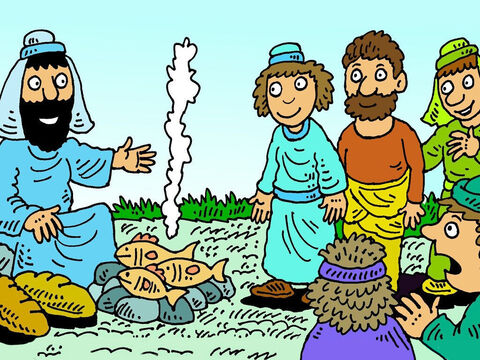
Today’s Gospel is so full of meaning – there’s so much there that we can’t possibly cover it all. At the same time, there are things in it that I find confusing. The apostles have already seen the Risen Lord; why are they fishing? And why don’t they recognize Jesus? Although from what we know of other resurrection stories, it seems that the Risen Christ is hard to recognize. And finally, what’s this awkward conversation between Jesus and Peter about? What’s going on there? Let’s look into it, because I think there’s a very important lesson for all of us here.
In 1987 there was an excellent movie called Moonstruck. It starred Cher and Nicolas Cage and won three Academy Awards. There’s a very famous scene in the film where Nicolas Cage tells Cher that he is in love with her; that she has ruined his life, turned his life upside down, he’s madly in love with her – turns out she’s about to marry his brother, so she slaps him and says, “Snap out of it!”
I think that’s a bit of what’s happening in today’s Gospel story.
Read more…A reflection for the 3rd Sunday, Lent, Year A. The readings are Exodus 17:3-7; Psalm 95; Romans 5:1-2, 5-8 and John 4:5-42.

This week we listened to the readings from Year A, because of our Catechumate Elects are doing the Scrutinies and those are the readings that correspond to that. But it’s good ’cause we got to hear one of my favourite Gospel stories: the Samaritan Woman at the Well. I love this story not just because it invites us to consider that all of us are thirsty and long for an abundant life and Jesus offers us living water, so that we can have life abundantly – that’s what the living water represents – but because I can imagine this very real, down-to-earth conversation between Jesus and this woman.
But I want to talk about the first reading because there was one line that really struck me, reading it this time: The Israelites tested the Lord saying, “is the Lord in our midst or not?” The Israelites didn’t know whether God was in their midst. Even after all the miracles, the 10 plagues, the parting of the Red Sea; even after rescuing them from the Egyptians, the Israelites questioned whether God was in the midst. Things were difficult and they were thirsty and they wondered if God was in their midst or not.
I find that so incredible, but it’s true, because it happens to us too.
Read more…


 deacon pedro