
The Eternal Weed Man
A reflection for the 16th Sunday, Ordinary Time, Year A. The readings are Wisdom 12:13, 16-19, Psalm 86, Romans 8:26-27 and Matthew 13:24-423.
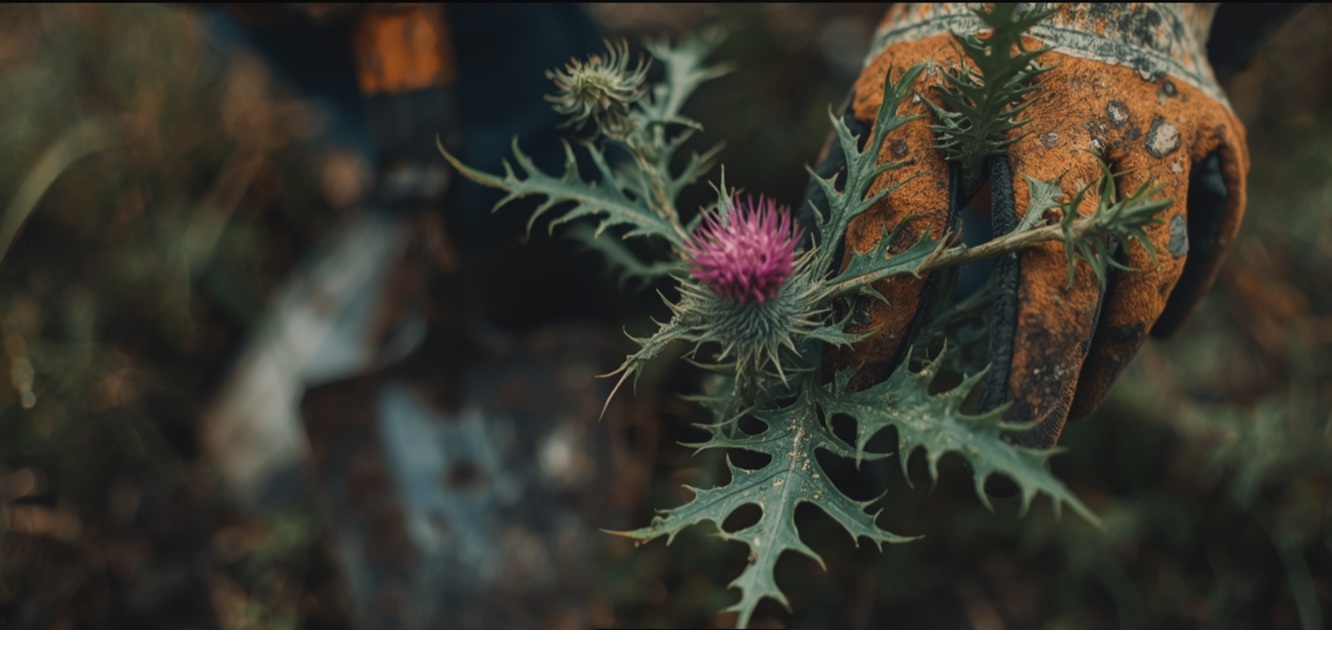
My wife and I finally gave up the eternal battle against the dandelions and the thistles and all the other weeds: clover and violets… they’re very pretty but we want grass… So I called Weed Man.
And, clearly, I have no idea how to deal with weeds because I thought they were going to come with like a blow torch and be done with all of them. But that’s not how it works. First they come and fertilize (how the fertilizer knows to only fertilize the grass, I don’t know; I’m sure they were fertilizing all the weeds!) and then, a month later, they come with the first application of their weed control. And then, a month later, they do that again… and then…. Wow… the whole thing takes forever! It’s clear that we are going to have to wait two summers to see if it’s worth it. And, we will probably still have to help by manually removing the thistles and fertilizing and seeding…
As much as I would have liked them to come with a blow torch and blow up all my weeds… I guess it makes sense. The important things in life, like taking care of weeds (and I don’t mean the literal weeds), takes time. And when it comes to weeding, God is not the God of the blow-torch. God is the God of the long-game. I guess it’s because the long-game is the only way to permanently and completely, best remove the weeds, the distractions, the sin and patterns of sin, that prevent us from putting God first.
It also makes sense because we know that today’s Gospel is not talking about literal weeds. Jesus himself explains that he is talking about the world. He says the field is the world and that the wheat and the weeds are the children of the world. And so that’s why we’re glad there’s no blow-torch.
But there’s another reason why the blow-torch method doesn’t make sense.
And so I’d like to offer an alternate meaning to the parable.
About a month ago I was speaking with a young man who’s really struggling with depression and anxiety and feelings of guilt and shame and great fear. He’s clinging prayer and to Scripture but all he reads is that at the end of time, God will separate the weeds from the wheat and the weeds will be thrown in the eternal fire where there will be wailing and gnashing of teeth. He feels that he is a weed, that he was evil, and that there was no hope for him. Trying to figure out how to respond to him and give him hope, in a Spirit-inspired moment, I realized that, in his case (and likely in case of all of our lives), the field is not the world, but rather his heart, his soul. The weeds and the wheat are not people, but the weeds and wheat in our hearts, in our souls. In the end, God will separate the good and bad that’s in our hearts. We might like to think that some people are weeds and it’s best to remove them. But thank goodness God doesn’t see it that way: No one is completely evil. We are all created good. We are just sinful and broken and hurting and we make mistakes. We do dumb thing. We do things we shouldn’t do. Sometimes we do bad things. Sometimes we do evil things. And so, isn’t it good that God doesn’t come with a blow-torch!
Every time we see in Scripture any reference to soil, it is an analogy for the soul. It’s easy to remember: soil = soul. We saw this last week in the Parable of the Sower where God spreads the seed all over the place and it lands in different kinds of soil. The soil is the soul. We tend to just accept the fact that some seed falls on rocky soil or thorny soil and that’s it. But it’s our soul. Do we work at it to remove the rocks and the thorns so that we improve the soil?
A long time ago I heard about an Indigenous elder who spoke about the daily struggle in his soul. He said that it was like there were two wolves inside of him that were constantly at each other: a good wolf and a bad wolf. A wolf that was greedy and envious and jealous, bitter and angry. The other wolf was kind and generous, peaceful and loving. And these two wolves were constantly fighting – that was the struggle in his soul. A student asked him, “Teacher, so, of the two wolves, who usually wins the fight?” The elder thought for a moment and then said, “the one I feed the most.”
Which wolf are you feeding? Are you fertilizing the weeds or the grass? Are you starving the weeds or the wheat? Are you just accepting that the soil is rocky and thorny or are you actually trying to remove the rocks and the thorns. Are you fertilizing and nourishing the soil so that the good seed takes root?
Because all you need is a little bit of good soil.
One of the first homilies I remember from Pope Francis was at World Youth Day in Rio in 2013. And he spoke about this. He said, in his Argentinian Spanish, that all we need is a little bit of soil, “un cachito de tierra”, for the seed to take root. I believe that we all have at least a little bit of good soil in our soul. And we’ve all received good seed. But if we don’t nurture it, it will stay small.
The Parable of the Mustard Seed tells us that the Kingdom of God doesn’t start out big; it starts very small, but if nurtured and cared for, it grows very big and has a huge impact on all around it.
The Parable of the Yeast adds to this idea: Only a little bit of yeast is enough to leaven a whole batch of dough. Jesus says “three measures of flour”. Do you know how much that is? It’s like 50 pounds of flour! That makes a lot of bread to feed a lot of people.
But… are we putting the yeast in the good batch of dough or in the bad batch?
Are we feeding the good wolf or the big bad wolf?
And so the Good News for us today is that we all have wheat and we all have weeds, but the Eternal Weed Man is at work. We can sit and let Him do all the work, or do we help? The Church teaches that God gives us his Grace and his Grace is always at work, even if we don’t see it or feel it. God is always working for our salvation. But we are called to cooperate with God’s Grace.
We also have to do our part at removing the rocks and the thorns and digging out the weeds. We have to feed to good wolf and starve the other one. Are you nourishing your soul? Going to Mass for one hour a week is not enough? How are your nurturing your soil? Through daily and consistent prayer? Through the Eucharist and the Sacraments? Especially the Sacrament of Reconciliation. The first reading from the Book of Wisdom today tells us that our hope is that God allows us to repent. Aren’t we glad that He gives us time to do that (not a blow-torch)! How is your prayer life? The second reading, from Romans, tells us that we dont know how to pray. But it doesn’t matter. Even if we struggle with prayer, the Spirit prays on our behalf. That’s God’s Grace working for us!
Always work at fertilizing the soil of your soul: The Eucharist and the Sacraments, Confession, prayer, Scripture and good deeds… that’s how we feed the good wolf and starve the other one.
And who is your Weed Man? Are you asking for His help? Are you working on your soil? Removing the rocks and the thorns, pulling the weeds. Feeding the good wolf?
If you do, you will find that at the end of the age, not only will you have removed most of the weeds but with these weeds, you may actually be able to turn them into wheat and you will yield a beautiful, fruitful harvest.


