
A reflection for the 6th Sunday, Ordinary Time, Year C. The readings are Jeremiah 17:5-8; Psalm 1; 1 Corinthians 15:16-20 and Luke 6:17, 20-26.
This reflection was originally posted on Feb 13, 2022.

Everyone wants to be happy. And you know what? God wants you to be happy too. That’s all God wants. He wants you to be happy in this life but more than that, He wants you to be happy with him in Heaven. But if we listen to today’s Gospel, we might think that Jesus doesn’t want us to be happy at all. Blessed are you who mourn…? Who wants to be poor? Who wants to be hungry? Sad? Attacked and insulted?
I don’t think so.
Three hundred years before Christ, a Greek philosopher named Aristotle wrote about happiness. For Aristotle and the Greeks of his time, happiness was the ultimate end and purpose of human existence – so it wasn’t exactly the same as we define happiness today. It was a bit more. And Aristotle argued that there are four levels of happiness. Have you heard of them?
Imagen por Albrecht Fietz de Pixabay.
Texto originalmente publicado en ingles el 27 de febrero del 2020.
Original text in English at Deacon-structing La Candelaria.
Mi abuelo paterno nació el 2 de febrero de 1884. Se llamaba Candelario.
La verdad, creciendo, nunca pensé mucho en él ni en su nombre. Nunca lo conocí; murió cuando mi papá era niño. Pero mi tío también se llamaba Candelario.
De adulto, vine a conocer la devoción a la Candelaria, que es una advocación mariana, también conocida como “la Virgen de la Candelaria”, que tuvo su origen en Tenerife, una de las Islas Canarias. Se celebra el 2 de febrero, día que también es la fiesta de la Presentación del Señor Jesús en el Templo.
Read more…
Reflexión para el XIII Domingo del Tiempo Ordinario, Año B. Las lecturas son Sabiduría 1,13-15. 2,23-24; Salmo 30; II Corintios 8,7.9,13-15 y Marcos 5, 21-43. La escribí originalmente en ingles, el 28 de Junio, 2015.
“Dios no creó la muerte.”
Es todo lo que podía pensar el sábado pasado.
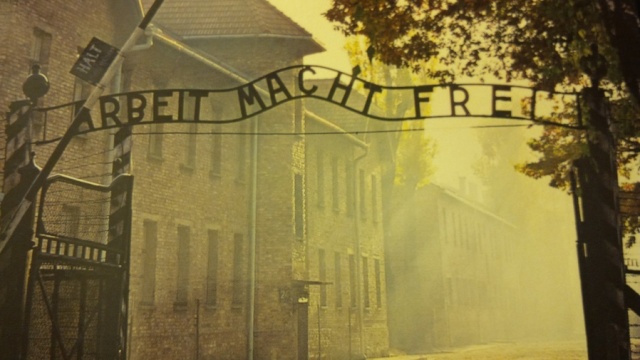
Estaba en Polonia y el sábado pasado tuve la oportunidad de pasar el día entero en el campo de concentración de Auschwitz-Birkenau. Todo lo que podía pensar era “Dios no creó la muerte”. Pero hubo mucha muerte en Auschwitz.
Entre 1940 y 1945, 1.2 millones de hombres, mujeres y niños fueron traídos a los campos nazis de Auschwitz y Birkenau en Polonia. De estos, 90% fueron asesinados; 90% eran judíos. Los traían en vagones de tren para transportar ganado. Cuando llegaban los sacaban a la fuerza y separaban: hombres a un lado, mujeres a otro lado. Luego eran separados nuevamente: los que eran considerados aptos para trabajar y los que no. Si no te consideraban apto para trabajar te enviaban inmediatamente a la cámara de gas. 75% de las personas que llegaban a Auschwitz no se quedaban ahí; Eran enviados directamente a las cámaras de gas.
Read more…

Do you want to improve your homilies and your preaching?
Read this 5-part series!
For the last couple of weeks I’ve been sharing with you some of the content from a conference in homiletics that I recently attended as part of St. Augustine’s Seminary’s 100th anniversary celebrations (Read part 1, part 2, part 3 and part 4). There are many ways to prepare a homily, but preaching experts agree that homilies must be first and foremost scriptural. They must also be liturgical and pastoral. Some would even suggest that they have to be dogmatic or catechetical by definition, since in a homily, we are learning something about our faith.
One thing that all presenters at the conference agreed is that before we even worry about preparing a homily, we need to prepare the homilist. If the preacher is not a man of prayer, who is in daily relationship with the Word, who is also a man who is in relationship with his congregation (a listener of the Word and of the people), then it doesn’t matter how eloquent he is as a speaker or how brilliant the text of his homilies are.


 deacon pedro