
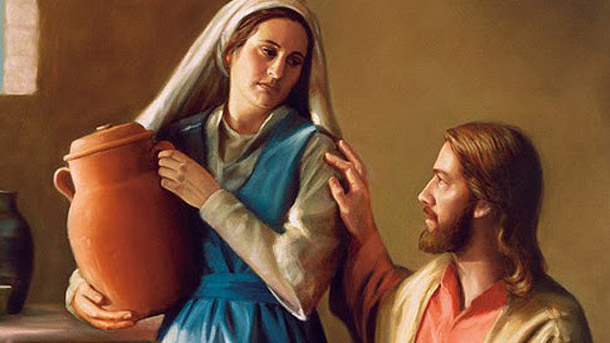
I don’t want to run to the Cross. I want to run from the Cross. And today, the Monday after WYD the Cross beckons me. Today, exhausted, after a week of 16-hour days, I complained to Jesus that I had to do all the work by myself. Actually, I didn’t complain to Jesus; I just complained. But Jesus answered right away: “Today is the feast of Martha and Mary. ”
I’ve always liked Martha: She is the example of the service that Pope Francis keeps reminding us of. She reminds me of diaconal service. Her service is diakonia. And this is what this papacy seems to be about. When Francis was elected I said that the Church would become a more diaconal Church. I think that it’s fair to say that it already has. And here in Rio de Janeiro, we have just spent a week of Pope Francis reminding us of this call to service, but he didn’t call it service; he called it love. How do we build the Church? We love.I’ll never forget the three words that he gave us on Thursday night when telling us that we need to be athletes of Christ. How do we train? We train through prayer, the Sacraments and love of the other. They’re all important, yet so often the story of Martha and Mary is interpreted to mean that prayer is the most important part. Read more…

A multitude that could not be counted… That was the scene last night as we walked from the media centre back to our hotel. Authorities estimate the crowd at 3 million, the largest crowd ever at Copacabana beach, surpassing the annual new year celebration. All good, except for the fact that 3 million need a place to sleep and washrooms and food.
But last night was not about numbers. It was about hearts. 3 million hearts (and many more through media) joined Pope Francis in adoration. We joined in one voice confirming our commitment to be disciples and missionaries.
Being a missionary means going out to help those in need. It’s hard not to see those in need in this city of Rio de Janeiro. With that in mind, a grassroots initiative began inviting pilgrims to leave their sleeping bags with a homeless person. All they have to do is give it with someone who looks like they could use one. There are many homeless in Rio. I thought this is a great way to give; To be disciples and missionaries and to put into visible practice what Pope Francis is so comfortable doing; making disciples of all nations, and using words only if necessary.
Read more…
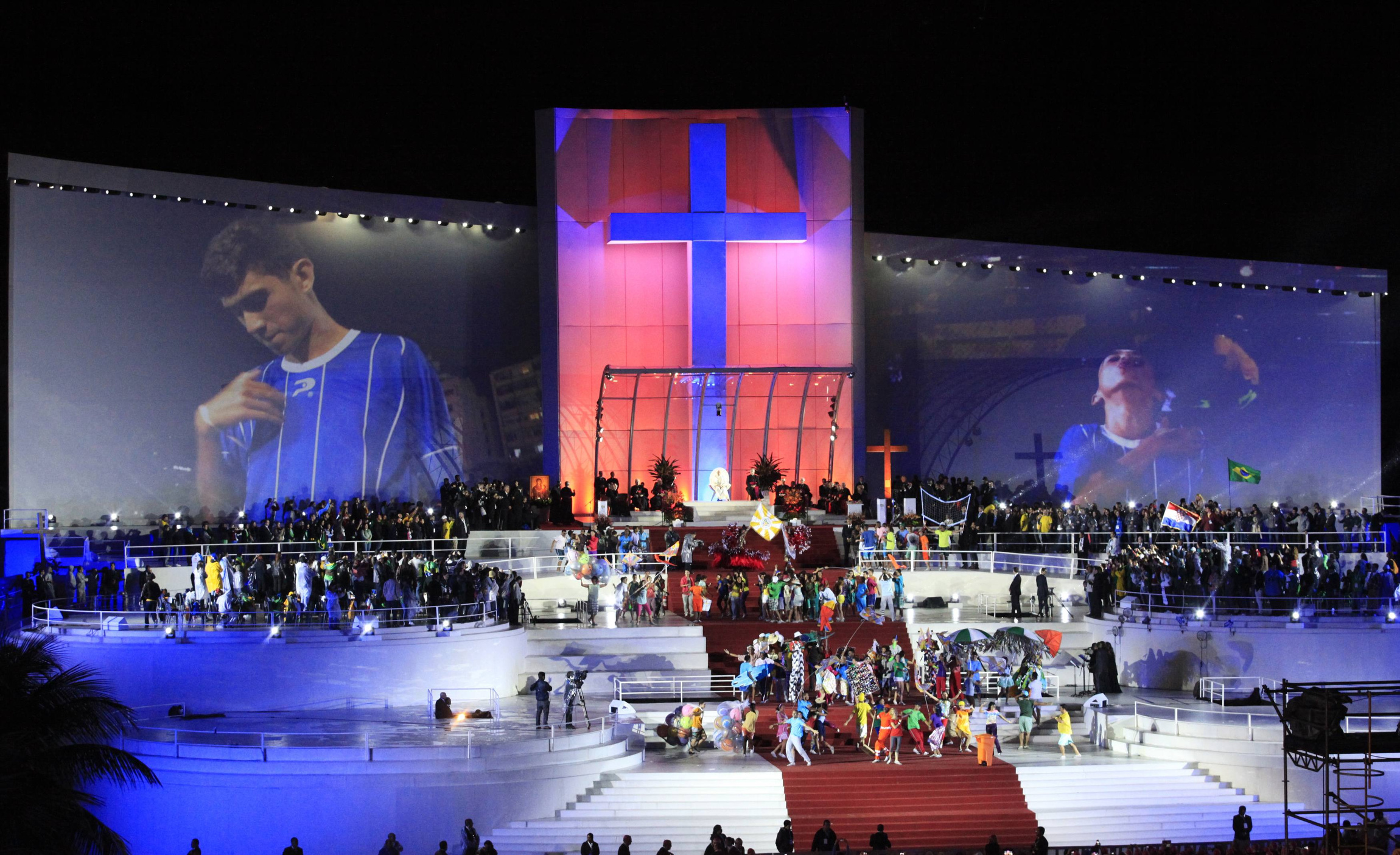
Pope Francis sits on a stage on Copacabana beach during the World Youth Day welcoming ceremony in Rio de Janeiro July 25. (CNS photo/Ricardo Moraes, Reuters) (July 25, 2013) See POPE-COPACABANA July 26, 2013, and POPE-BEACHJAM July 26, 2013.
I don’t know why, but this World Youth Day, I’ve been thinking a lot about the Cross. It is partly because the Cross is the symbol of WYD (very clearly displayed as the WYD Cross). But there are other reasons. I began this journey reflecting on the adventure of walking alongside Jesus hoping to encounter Jesus. At some point in that journey, we are bound to encounter the Cross.
The Feast of St. James was this past week on July 25, and I had the wonderful opportunity to be the Deacon of the Mass with Archbishop Mark Coleridge of Brisbane, Australia. Being up on stage in such a prominent role was an emotional experience. Coleridge spoke about martyrdom because St. James, the brother of St. John, was the first disciple to be martyred. He was beheaded by King Herod. But this is the disciple who asked Jesus if he and his brother could sit at His right and at His left. Jesus asks them if they are willing to drink from the same chalice that He will drink. They respond yes, not understanding at all what that meant. Surely, at the time of his martyrdom, St. James would have been reflecting on the journey of the last couple of years. Finally, understanding and filled with grace, he did drink of the chalice. His encounter with Christ meant giving it all. Archbishop Coleridge also reminded us of the tragic train derailment in Spain that had taken place that morning. Forty-five people lost their lives. They were on their way to Santiago de Compostela, where the shrine dedicated to St. James is located. Pilgrims on a journey lost their lives.
Read more…
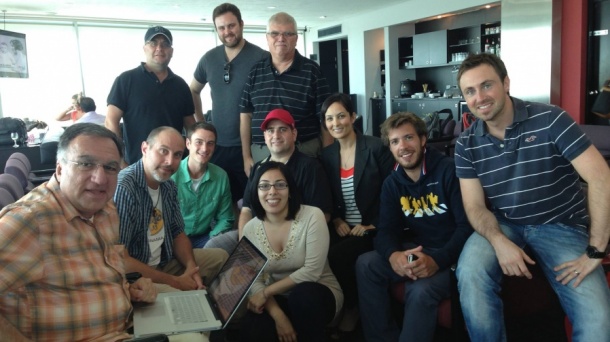
Salt + Light Rio Team. Back row: Wally Tello, David Leross, Javier Capella. Front row: Fr. Thomas Rosica, CSB, Deacon Pedro, Sebastian Gomes, Richard Valenti, Cheridan Sanders, Charles LeBourgeois, Joshua Lanzarini. Front: Alicia Ambrosio.
How fitting: We set off on our journey to Rio on the Feast of St. Bonaventure, literally “bona aventura” or good adventure. That’s what World Youth Day is: An adventure in faith. I wonder if that’s what the disciples were thinking as they made their way down from Galilee to Jerusalem with Jesus for that fateful Passover.
I thought of that last Sunday. For the last couple of weeks we’ve been listening to various readings from the Gospel of Luke. In them, Jesus is teaching the disciples what it means to be a disciple. He tells them it means to pick up your cross; it means to deny yourself. And then he sends them out; first the twelve and then the seventy-two. They go out on a mission to proclaim the Kingdom of God and they do that by healing the sick, caring for the afflicted and expelling evil spirits.
Read more…


 deacon pedro