

A reflection for the 22nd Sunday, Ordinary Time, year B. The readings are Deut 4:1-2, 6-8; Psalm: 15; James 1:17-18, 21-22, 27 and Mark 7, 1-8, 14-15, 21-23.
Maybe some of you are going to university this week, or have children going to university. One of the things about going to university, especially if you move out of the house, is that all those rules you had growing up – you don’t have to follow them anymore. You can stay up all night, sleep in, miss class, drink orange juice out of the container in the fridge; you don’t have to wash your hands before you eat… That’s the way it is. When I was young, I didn’t want to be told what to do; I wanted to figure it out by myself. I didn’t mind doing the things I was being told to do, but I wanted to do them because I wanted, not because I was being told.
Read more…
A reflection for the 19th Sunday, Ordinary Time, Year B. The readings are 1 Kings 19:4-8; Psalm 34; Ephesians 4:30-5:2 and John 6:41-51.
I recently read an article by Fr. Ron Rolheiser in which he quoted a story by Christian de Cherge, the Trappist Abbot who was martyred in Algeria in 1996, who said that on the day of his First Communion he said to his mom, “I don’t understand what I am doing.” His mother replied, “It’s OK, you don’t have to understand it now. Later you will understand.” Fr. Rolheiser goes on to say that he imagines this exact conversation at the Last Supper. Jesus says, “This is my body, this is my blood, take and eat, take and drink. Do this in memory of me”. The apostles say, “We don’t understand what we are doing” and Jesus replies, “It’s OK, you don’t have to understand it now. Later you’ll understand.”
Read more…

A reflection for the 17th Sunday, Ordinary Time, Year B. The readings are 2 Kings 4:42-44; Psalm 145; Ephesians 4:1-6 and John 6:1-15.
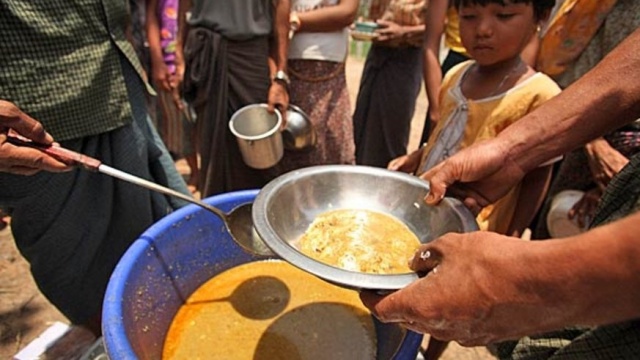
What did you bring to Mass today? I’ll tell you what I brought: my insecurities, my doubts, my fears; my frustrations from work this week. I also brought my hopes and dreams and my joys of this week. I brought them so I can offer them up, place them here at the foot of the altar, so that Christ can multiply them, just as he multiplied the loaves and the fishes.
Today’s story of the feeding of the multitudes is the only miracle that appears in all four Gospels. In fact, in Mark and Matthew it appears twice in each. So that tells us that it’s important. In John, which is the one we heard today, the miracle happens just before the Passover and it takes place in the same chapter where later Jesus is going to declare, “I am the bread of life.” This is in John chapter 6, in what we call the “Bread of Life discourse”. In fact, this whole year we’ve been reading from the Gospel of Mark, but starting today, for five weeks, we’re going to be reading from the sixth chapter of the Gospel of John. So, it’s like we’re getting the gift of a little summer retreat on the Bread of Life. For John the whole Bread of Life discourse begins with this story of the miracle of the multiplication of the loaves and the fish.
Read more…
A reflection for the 15th Sunday in Ordinary Time, year B. The readings are Amos 7:12-15; Psalm 85; Ephesians 1:3-14 and Mark 6:7-13.
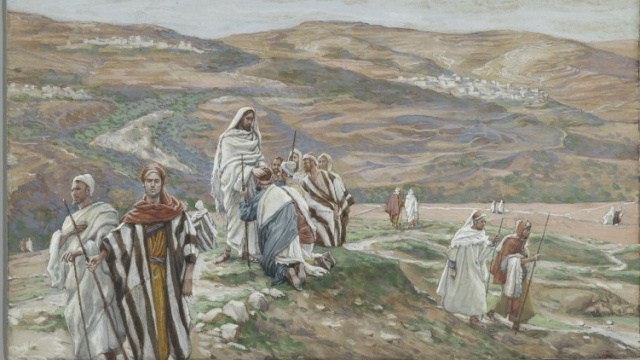
Today Jesus give us the tools that we need for the mission. So we need to first ask ourselves one question: “What is the mission?” What is our two-fold mission? Our mission is, first, to get to Heaven and second, to take others with us. We don’t go alone; we go together.
If you’re still unsure about that, just re-read the beginning of Paul’s letter to the Ephesians: God chose us to be holy and without blemish before him. And we have already received the first installment of our inheritance, the Holy Spirit. So no excuses. If you had the secret to the cure for cancer, wouldn’t you share that with everyone? Well, we have something better: the secret to life, to abundant life, to eternal life; the secret to eternal joy and satisfaction; the secret to holiness; the secret to getting to Heaven! No excuses like we heard last week with Ezekiel being sent to a rebellious people who didn’t listen to him (Ez 2:2-5). If people don’t listen to you, so what? Proclaim the Good News anyway. If people don’t recognise you, as happened to Jesus that he wasn’t even recognised in his own town (Mark 6:1-6). If people don’t recognise you; proclaim the Good News anyway. And no excuses about being weak, as we heard from Paul (2 Cor 12:7-10). No excuses about being weak, or not being prepared or being a sinner. Proclaim the Good News anyway!
Read more…


 deacon pedro